
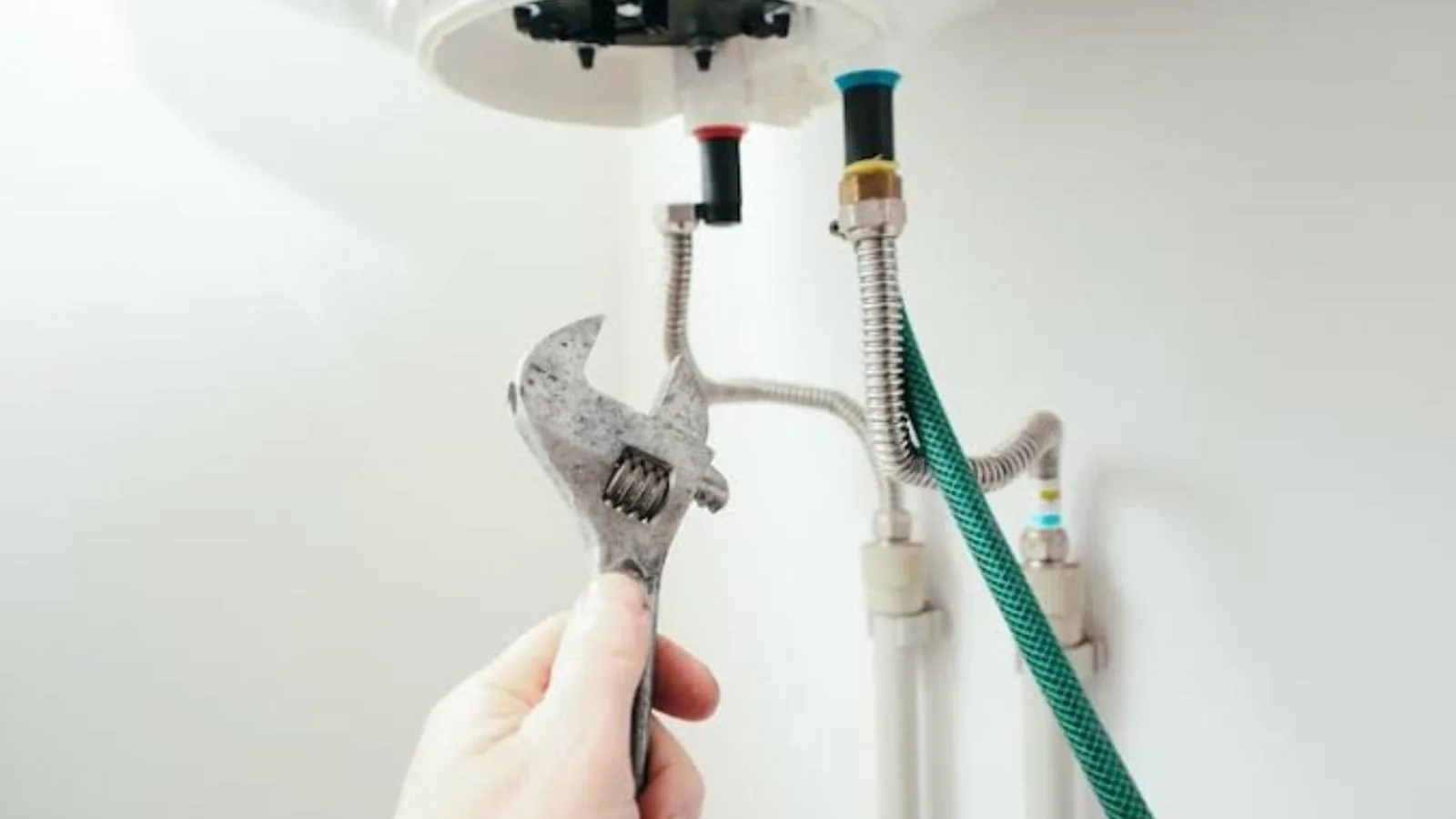
Water heater leak cleanup in Seaford, NY is the removal of water that escaped from a failed tank, fitting, valve or drain pan, followed by drying of every material it soaked. The dispatch line is open 24/7, and a tank that has let go rarely waits for business hours. Most of the water sits in a closet, garage corner or basement, but it travels along floors and into walls fast.
While you wait for the crew, close the cold water inlet valve above the tank, usually a lever or round handle on the pipe going in. Move boxes and anything porous out of the puddle. If a gas heater smells like gas, leave and call the gas utility or 911 first.
Water heater leaking right now: the first hour
Hot water from a tank is clean when it escapes, which is why a fast response matters. Clean supply water is Category 1 under the ANSI/IICRC S500 standard, and it slides toward Category 2 as it sits on dirty floors and soaks into insulation and carpet pad. Homes in inland Seaford Manor are covered on a page about interior leaks.
- Shut the cold inlet valve on the pipe feeding the tank. A quarter turn on a ball valve stops the supply.
- Turn the heater off. Set a gas unit to pilot or off, and switch an electric unit off at its breaker only if you can reach the panel on dry ground.
- Open a hot tap upstairs so the tank does not pull a vacuum, then drain nothing further until the plumber says so.
- Lift valuables, rugs and cardboard out of the water. Take photos of the heater, the data plate and the wet area before you move much else.
- Call the dispatch line, nights and weekends included.
Safety where water meets the panel, the outlets and the gas line
Water heaters often share a wall with the electric panel, and that combination is the real hazard. Standing water plus a live circuit can energize the whole puddle.
Before you call us
If water touches the panel, outlets or an extension cord, stay out of the room. Cut power at the main only if the panel is dry and you can reach it without stepping in water. If you are not sure, do not touch it.
For any spark, burning smell, buzzing or gas odor, call the utility or 911 first. The restoration line comes after the electrical or gas risk is handled.
Water still spreading from the heater? Call the dispatch line and we will talk through what to shut off and what to leave alone.
Call (516) 845-9582Signs the tank, the valve or a fitting is the source
Not every wet floor around a heater means the tank has failed. Finding the real source decides whether you need a plumber, a new heater or only a valve.
Tank body leak
Water seeps from the bottom jacket or under the insulation, often with rust streaks on the base. A corroded steel tank cannot be patched. The unit needs replacing, and the leak tends to worsen over days.
Fitting or valve leak
Drips at the inlet and outlet nipples, the drain valve or the temperature and pressure relief valve point to a part, not the tank. A discharge pipe running wet can mean pressure is climbing in the system.
Condensation or a clogged drain pan
A cold inlet pipe sweating in humid air, or a pan drain that backs up, can mimic a leak. Dry the surface and watch it for a day before you replace anything.
Why tanks fail, and what your water supply has to do with it
A steel tank holds a glass lining and a sacrificial anode rod. Once the anode is used up, the steel corrodes from the inside, and sediment on the bottom overheats the lining until it cracks. Typical tanks wear out after roughly 8 to 12 years, though the range depends on water quality and maintenance.
Liberty Utilities lists Seaford among the communities in its Merrick water system. Ask your water utility about supply pressure and hardness for your address, because high pressure and mineral sediment both shorten tank life. A plumber can fit an expansion tank or a pressure reducing valve if the numbers call for it.
How the cleanup is assessed and carried out
We start with a moisture meter across the floor, the lower four feet of wall and the cabinet or framing next to the heater, then a thermal imaging camera to trace wet areas behind finishes. Pumps or a wet vacuum extraction unit remove the standing water first, because extraction pulls far more water than evaporation ever will.
Air movers push dry air across surfaces, and LGR dehumidifiers pull moisture from the air so it does not settle back into drywall or wood. Wet baseboard and drywall may need cutting at the bottom to let wall cavities dry. Readings are logged each visit until the materials return to their dry standard.
| Heater location | What usually gets wet | Typical approach |
|---|---|---|
| Basement or cellar | Slab, wall bases, stored boxes, finished room beside it | Extraction, then air movers and a dehumidifier. See basement water damage cleanup |
| Garage | Concrete, drywall base, stored items | Squeegee and extraction, short drying time on bare concrete |
| Closet on a finished floor | Subfloor, flooring, adjoining wall cavities | Lift flooring edges, dry the subfloor, open the wall base |
| Attic or upper floor | Ceiling below, insulation, framing | Contain the ceiling, dry from above and below. See ceiling water damage repair |
Repair, replace or dry only: honest trade-offs
A leaking fitting or relief valve is a modest plumbing repair, so drying and a part swap may be all you need. A leaking tank body means replacement. Drying the room before the new heater goes in saves you from setting a new unit beside wet framing.
Gas heaters add a vent and combustion air check at install. Ask the Town of Hempstead Department of Buildings whether a replacement in your home needs a permit, since the rule depends on the work and the fuel.
- Fitting or valve leak: plumber repairs the part, we dry the area.
- Tank leak: plumber replaces the unit, we extract and dry first when the floor is wet.
- Slow seep found late: expect more drying scope, and possibly wall and drywall repair.
What sets the price of a water heater leak cleanup
The biggest factors are the water category, how many square feet are wet, and which materials absorbed it. Concrete dries cheaply. Carpet pad, insulation and drywall cost more because they are often removed rather than saved.
Drying days and the number of air movers and dehumidifiers also drive cost, as does any rebuild such as new baseboard or paint. A leak caught within hours is a very different job from one that ran all weekend. Scope and price are explained before work starts, and a call gives you a real number for your house.
A general note on insurance
Sudden and accidental water damage is often covered by homeowners policies, while a slow leak that went unnoticed for weeks often is not. The tank or heater itself is usually your cost either way. Check your policy for the exact wording and deductible, and ask your insurer what it requires.
NY DFS advises documenting damage before cleanup and filing as soon as possible. Take photos and keep the failed part if you can. We cannot promise any claim outcome.
What we do not do
We do not replace the water heater, repair gas lines or rewire electrical. That work belongs to a licensed plumber or electrician, and we will tell you when the source needs one. Restoration is the extraction, drying and cleanup that surround the repair.
We also cannot dry a room that is still being fed by an active leak. Get the supply shut off first.
What Seaford homeowners should know before the next failure
The Census reports a 92.9% owner-occupied rate in Seaford, so most readers own the heater and the shutoff valve. Find the inlet valve today and test it, since a stuck valve is what turns a drip into a flood. Renters should report the leak to the landlord in writing, who has duties under New York's warranty of habitability.
If the heater is old and sits on a finished floor, a drain pan piped to a floor drain gives you a margin. Our service area page lists the towns we cover, and the contact page explains how dispatch works.
Frequently asked questions
Do you handle water heater leak emergencies at night or on weekends in Seaford?
Yes. The dispatch line runs 24/7. Close the cold inlet valve, keep out of any water touching electrics, and call. We will not promise an arrival time, but we will tell you what to do until the crew gets there.
Should I drain the tank myself after it leaks?
Usually no. Draining a failed tank adds more water to the floor unless you hose it to a drain, and a hot tank can scald. Shut the inlet, turn the heater off, and let a plumber decide. If the tank is fully emptied by the leak, there is nothing left to drain.
How long does drying take after a heater leak?
Most jobs run 2 to 4 days of equipment, though concrete and tile dry sooner and wet insulation or subfloor runs longer. We read moisture meters each visit and stop when materials hit their dry standard, not on a calendar. The ANSI/IICRC S500 standard guides this.
Is water from a water heater clean or contaminated?
It starts as clean supply water, Category 1. Left on a floor or soaked into pad and insulation, it can degrade after about 48 hours. That is a reason to act early, and to see water extraction if more than a puddle is involved.
Will my insurance pay for the water heater itself?
Often the heater is excluded as a wear item, while the sudden water damage it caused may be covered. Wording differs by policy, so read yours and ask your insurer. We document the damage and the drying so you have records to send.
Can mold grow after a water heater leak?
Mold needs moisture and time, so quick drying lowers the risk, but nobody can promise it will not appear. If you see growth or smell mustiness days later, mold remediation is a separate step, and health questions belong to your physician.
Whatever the hour, a call gets the cleanup scoped. Scope and price are explained before any equipment is set.
Call (516) 845-9582