
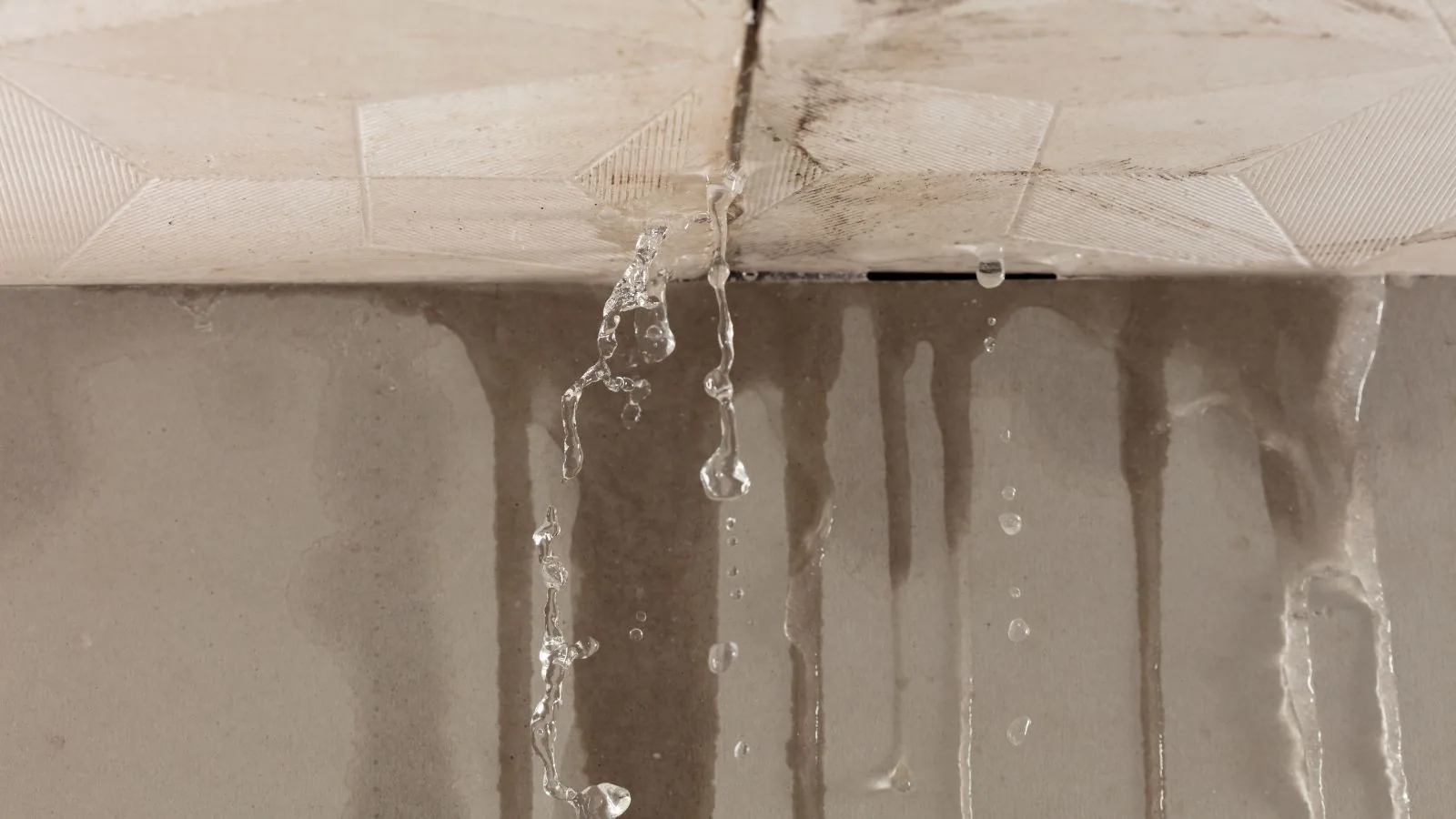
Storm water damage is wetting caused by wind and rain that enters a building through its envelope: the roof covering, flashing, siding, windows, doors or a failed seal. In Seaford, NY that can happen in a nor'easter, a thunderstorm or a tropical system, and the 24/7 line is open when it does. This page is about water that came from above and from the sides, not rising floodwater.
While you wait for help, move belongings out of the drips, put out buckets, and keep people away from sagging ceilings.
When storm water in the house is an emergency
It is urgent whenever rain is still entering, a ceiling is bulging or electrical items are wet. A bulging ceiling can release a large amount of water at once, so do not stand under it.
Moisture also moves fast through insulation and drywall. Call the dispatch line the same day if you can, even if a roofer cannot come yet, because drying of the part you can reach should not wait for the roof.
Safety first: wind, water and power
Storms damage wiring, trees and meter bases as well as roofs.
Before you call the restoration line
If water is running toward the electric panel, outlets or light fixtures, stay out. Cut power only if the panel is dry and you can reach it without stepping through water.
Smell gas, see downed lines or a damaged meter? Leave and call 911 and the utility first. Do not climb onto a wet roof, and stay clear of ceilings that sag.
Rain is coming through a window or the attic and you cannot get a roofer yet? Call the dispatch line and start drying the part you can reach.
Call (516) 845-9582Hurricane Irene and Seaford: a reminder about canals and rain
The National Weather Service Freeport impacts sheet records canal overflows in East Rockaway, Seaford and Freeport during Hurricane Irene on August 28, 2011, with a peak storm tide of 8.9 feet MLLW. Canal overflow is flooding, which is a different loss from rain coming through the building envelope.
Tie that to your own house. Look at the lowest openings, such as window wells, basement doors and garage thresholds, before the next forecast. If water rose from outside, that is a flood loss, not storm intrusion, and our flood damage restoration page covers it.
August 2024: flash flooding and what rate of rain does
On August 18 and 19, 2024, the National Weather Service listed destructive flash flooding across parts of Long Island. Its warning for southeastern Nassau and western Suffolk counties reported two to four inches already fallen, rain rates of one to three inches per hour, and two to three more inches possible, naming Levittown and Massapequa.
The practical lesson is the rate. Gutters, roof valleys and window seals that cope with a normal rain can fail at three inches an hour. After a storm like that, check ceilings, attic floors and window trim even if the rain stopped hours ago.
How crews handle storm intrusion
First comes extraction of standing water and removal of soaked insulation and ceiling tile. Moisture meters and thermal imaging cameras then show where water travelled behind finishes, since wind-driven rain often follows framing far from the entry point.
Air movers and LGR dehumidifiers dry the rest, and a temporary tarp or board-up is arranged through a roofer or carpenter while the weather is bad. Where water came through a ceiling, see ceiling water damage repair, which also covers roof leaks.
Storm intrusion or flood: why the difference matters
Rain that enters through a roof, siding or window is a different loss from water that rises from the ground or a canal. The cleanup and the insurance treatment can differ.
| Source | What it is | Where to read more |
|---|---|---|
| Roof, flashing, skylight | Rain entering from above | Ceiling and roof leak page |
| Siding, windows, doors | Wind-driven rain through the walls | This page |
| Rising canal or tidal water | Flood from outside | Flood damage restoration |
| Groundwater seepage | Water entering at the foundation | Basement water damage cleanup |
| Overloaded drains | Wastewater pushed back into the house | Sewage backup cleanup |
What sets the price of storm damage cleanup
Price follows the water category, which is usually 1 or 2 for rain intrusion, the affected area and the materials soaked. Insulation, ceiling drywall and flooring change the scope, and so does the number of drying days with equipment.
Tarping, roof repair and rebuild are separate trades and estimates. Scope and price are explained before work starts, and a call to the dispatch line gets you a real number.
Insurance after a storm: general notes
Sudden and accidental storm damage is often covered, while gradual leaks and neglect often are not. Flood is usually excluded from a typical homeowners or renters policy, according to New York DFS, and needs its own flood coverage.
Check your policy for wind and water terms, and ask your insurer. Photograph damage before cleanup, keep receipts for emergency steps, and do not make permanent repairs until the insurer has inspected.
What we do not do
We dry and clean the building. We do not repair roofs, replace windows or cut trees. After a storm, call a roofer for the opening and a plumber or electrician if systems were hit.
If wet materials stay in place, mold can follow, so read about mold remediation if materials stayed wet for days. Ask the Town of Hempstead Department of Buildings whether your repair needs a permit.
Seaford homes and the next storm
Nassau County's hazard mitigation plan rates flooding and coastal hazards as highly likely. Check the FEMA flood map for your address and keep a list of the lowest points where storm water gets in.
Our service area page lists the towns nearby. NOAA's annual precipitation normal at Islip MacArthur Airport, the nearest long-record station, is about 46 inches, which is enough to test an aging roof.
Frequently asked questions
Do you handle storm water damage emergencies at night or on weekends in Seaford?
Yes. The dispatch line is open 24/7. Storms do not keep business hours, so night and weekend calls are routine. Make the area safe first, then call.
Is storm damage the same as flood damage?
No. Storm damage is rain and wind entering through the roof, siding, windows or doors. Flood damage is water rising from outside, such as a canal, tide or heavy runoff. They are treated differently in cleanup and often in insurance, so tell your insurer exactly how the water got in.
Can you stop the leak in my roof?
We dry and clean the inside. A roofer or carpenter seals the opening, and we can help you decide what to protect while you wait for them. Temporary tarps are common when the weather will not allow a repair.
How soon should I start drying after a storm?
As soon as it is safe. Wet insulation and drywall can hold moisture for days, and delays increase the amount that has to be removed. Photograph first, then pull up wet items and call the dispatch line.
Will insurance cover wind-driven rain?
Often when it is sudden and accidental, but not always. Many policies have terms about how water enters the building. Check your policy, ask your insurer, and document the damage. We cannot promise approval.
What should I check after a very heavy rain like August 2024?
Look at ceilings, attic floors, window frames and basement corners. The National Weather Service reported rain rates of one to three inches per hour that night. Stains that grow after the rain stops mean water is still moving inside.
After a storm, the sooner materials start drying, the less has to be removed. Call day or night, and get the scope explained first.
Call (516) 845-9582