
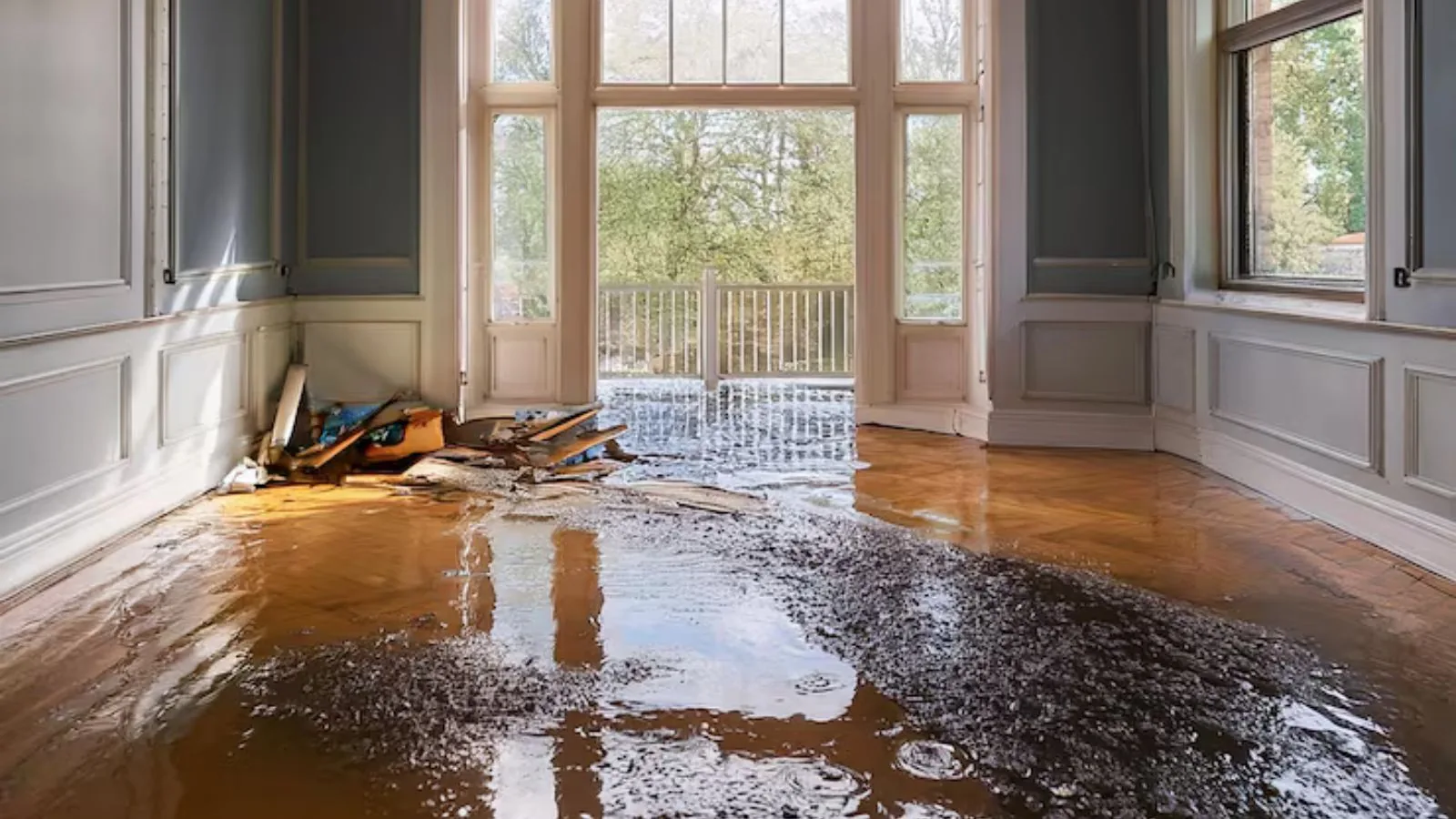
Wall and drywall water damage repair is the work of finding where water traveled behind a wall, drying the cavity, and cutting out and replacing drywall, baseboard or insulation that cannot be dried. If a wall in your Seaford, NY home has a brown stain, soft spot or bubbling paint, the visible mark is usually only part of the wet area. Water moves down inside the wall and along the bottom plate.
While you wait, stop the water source if you know it, then keep the wall open to air by moving furniture away. Do not poke the stain or peel the paint, which can spread wet gypsum. Turn off any outlet on the wet wall at the breaker if the panel is dry and safe to reach.
Signs that a wall is wet inside
The surface tells part of the story. Paint bubbles or blisters, a stain with a defined brown edge grows after each wetting, and tape seams loosen and lift. Drywall that is truly saturated feels soft or powdery when pressed, and may sag between the studs.
Other signs live behind the wall. Baseboards pull away or swell, wallpaper peels at the seams, and a faint musty odor appears in a closed room. A wall that feels cool to the touch compared to its neighbors may be holding moisture, and a thermal imaging camera makes that visible without cutting.
Where the water behind your wall came from
Wall water damage usually traces back to a handful of causes, and each leaves a different pattern. A supply line leak shows a vertical stain below the pipe. A roof or window leak shows at the top of the wall. A washing machine or toilet supply line leaks near the floor, and a failed shower pan stains the wall behind it.
Pipes in exterior walls are a special case in winter. NOAA normals for the nearest long-record station, Islip MacArthur Airport, show about 98 days a year with lows at or below freezing. If a line in an outside wall split during a cold snap, see our frozen pipe damage page, and have the wall opened and dried as the ice thaws.
A damp wall can hide a wet cavity. Call, tell us what the wall looks like and where the water came from, and we will explain the scope before any cutting.
Call (516) 845-9582How we find the wet area and dry the cavity
We start with a moisture map. A pinless moisture meter scans the wall surface, a pin meter confirms the readings in studs and bottom plates, and a thermal imaging camera helps trace the wet path. Readings are compared to a dry reference wall in the same home.
If the cavity is wet, the fastest fix is often a few small drill holes at the base of the wall, or a cut baseboard, so air movers and dehumidifiers can push dry air through the stud bays. For insulated cavities we remove wet batt insulation, since it traps water against the framing. Drying continues until the studs and sheathing read dry, as described in ANSI/IICRC S500. Ask any company whether its crews follow that standard.
What drywall can be saved and what must be cut
Drywall is a gypsum core wrapped in paper, and the paper is what goes first. Clean-water spots caught quickly can dry in place, but the board may swell or sag. Once the core turns soft, it does not recover its strength.
A common method is a flood cut, where the wall is cut a set height above the waterline, often two feet when water wicked up, so the wet section is removed and the studs are exposed to dry. We cut in straight lines to make patching easier, and we keep cuts small when the readings allow it.
Repair choices compared
The best repair depends on how wet the board got and what kind of water caused it. Here is how the options usually compare.
| Condition | Typical repair | Trade-off |
|---|---|---|
| Surface stain, wall dry on meter | Stain-blocking primer and repaint | Cheapest, but only if readings are dry |
| Damp board, still firm | Dry in place with air movers, then repaint | Needs follow-up readings |
| Soft or sagging board | Cut out the section, dry studs, patch and finish | Seams may show after painting |
| Wet insulation in the cavity | Remove insulation, dry the framing, reinstall | More opening of the wall |
| Contaminated or long-term wet wall | Remove board and insulation to the studs | Larger scope, and possible mold assessment |
Baseboards, trim and paint after the wall is dry
Baseboard and trim are often the first things to go, since they sit right at the floor. We pull them off to reach the cavity and set them aside when they can be saved. Painted solid wood can often be reused, while MDF baseboard swells and is replaced.
After drying, the patch is taped, mudded and sanded, then primed with a stain-blocking primer so the water mark does not bleed through. Painting a single wall is possible, but matching an old color across a room often means painting the full wall or room. If the wet wall is a ceiling and wall corner, the repair is coordinated so both surfaces are finished together.
What sets the cost of wall repair
Several things move the price. The water category matters, since contaminated water means board and insulation come out. The height and length of the wet area, wall type and finish, and drying days and equipment all count. Plaster, tile backer board and textured walls take more labor than smooth drywall.
Rebuild scope is another factor. Our core work is mitigation, which covers the dry-out and the removal of wet material. Taping, finishing and paint are the rebuild stage and are priced separately. Scope and price are explained before work starts, and a call to the dispatch line gets you a real number for your walls.
Walls and your insurance policy
A sudden event, such as a supply line failing, is often covered, while a slow leak behind a wall that went unnoticed for months often is not. Flood is usually excluded unless you carry separate flood coverage, and the New York State Department of Financial Services says a typical homeowners or renters policy does not cover flood. Check your policy or ask your insurer.
Take photos of the stain and of any cut openings before repairs, and keep removed material if your insurer asks to see it. Wait for the insurer's inspection before permanent repairs. We provide moisture logs, and we cannot promise how a claim will be decided.
What we do not do
We do not repair the pipe, fixture or roof that caused the leak. A licensed plumber or roofer does that, and our burst pipe page explains how we coordinate. We also do not paint a whole house or do cosmetic renovation unrelated to the loss.
If we open a wall and find mold on the framing, we stop and explain what the next step is. Under New York law, mold projects over 10 square feet need a licensed assessor and a separate licensed remediator, so we point you to our mold remediation page rather than guessing.
Wall repair for Seaford homes
If you plan a rebuild after water damage, ask the Town of Hempstead Department of Buildings whether the work needs a permit. We serve Seaford and nearby towns. See the service area page, or contact us to describe the wall first.
Frequently asked questions
Can wet drywall be dried instead of replaced?
Sometimes. If the water was clean, the board is still firm and the paper is intact, drying with air movers can save it. Soft, sagging or crumbling gypsum, and board that was wet with contaminated water, should be cut out. Moisture readings decide.
Do you have to open the wall to dry it?
Often only a little. Small holes at the base of the wall or a removed baseboard let air movers push dry air through the stud bays. We open more only when insulation is wet or readings stay high. Opening a wall is much cheaper than rebuilding rot.
How long before I can paint?
Wait until moisture readings are dry and any patched joint compound has cured. That can be a few days for a small area and longer for a large one. Painting over a damp wall traps moisture and brings the stain back.
Why does the stain come back after I paint it?
Brown water stains bleed through ordinary paint, and a stain that keeps returning usually means moisture is still in the wall. Dry the cavity first, then use a stain-blocking primer. If it keeps returning, there may be an active leak.
My wall smells musty but I see no mold. What now?
A musty odor usually points to moisture trapped behind the surface. A moisture meter and thermal imaging camera can locate it without opening everything. If mold is found, a licensed assessor sorts that out under New York law, as explained on our mold remediation page.
Is wet insulation always removed?
Most of the time, yes. Fiberglass batts hold water against the studs and dry slowly, and wet spray foam or blown-in material is harder to dry. We remove what is wet, dry the framing and reinstall new insulation so the cavity does not stay damp.
Drywall does not stay a small problem for long. Call the dispatch line for a moisture check, a clear scope and a real price before work starts.
Call (516) 845-9582