
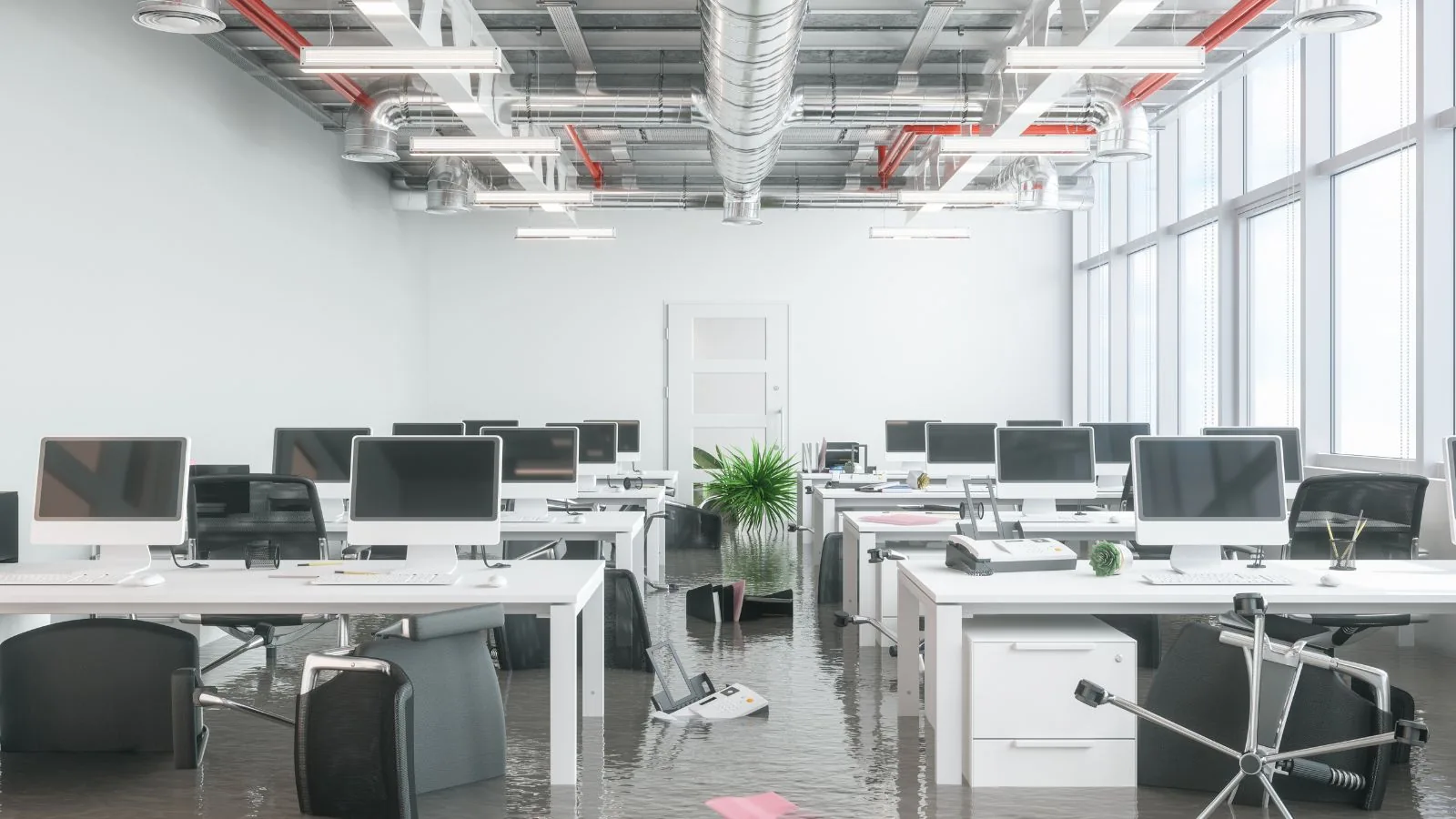
Commercial water damage restoration is the removal of water and the drying and cleanup of a business property, including offices, retail space, restaurants and multi-unit buildings. If water has reached your space in Seaford, NY, the line is open 24/7 and the next hour matters. Shut off the water source if you can do it safely, and keep customers and staff out of wet areas.
While you wait, move inventory, paper records and computers off the floor, photograph everything, and do not walk through water near the electric panel.
For business losses, ANSI/IICRC S500 is the published reference for how water is classified, dried and documented, and it is reasonable to ask a vendor how its process follows it.
When business water damage is an emergency
It is an emergency whenever water is spreading, the source is not stopped, or you cannot operate. A running pipe, a sprinkler discharge, a roof leak during rain or a flooded stockroom all qualify.
Business losses build by the hour, since closed doors cost income and wet stock cannot be sold. A prompt call gives the crew time to extract water before it wicks into walls and flooring.
Safety first: water, electricity and shared buildings
Commercial spaces run more electrical load than homes, and water around panels, point-of-sale systems and wiring is a hazard.
Before you call the restoration line
If water touches the electric panel, outlets or equipment, stay out. Cut power only if the panel is dry and you can reach it without standing in water.
For any electrical or gas risk, call 911 and the utility first. In a multi-tenant building, tell the property manager at once so the main water valve and any shared systems can be dealt with.
Water in the shop or the hallway outside the units? Call the dispatch line now, before inventory and records get any wetter.
Call (516) 845-9582The first hour on a commercial loss
- Stop the source: close the nearest shutoff valve if it is safe to reach.
- Clear people from wet floors and post a sign or tape off the area.
- Lift inventory, files and electronics onto shelves or tables.
- Photograph the damage and note the time you found it.
- Call the 24/7 dispatch line, then your landlord or property manager, then your insurer.
How crews dry a commercial space
Extraction units and trash pumps remove standing water first. Moisture meters and thermal imaging cameras then map wet walls, slab edges and ceiling cavities, since commercial buildings often have layered assemblies that hide moisture.
Drying uses air movers and LGR dehumidifiers sized to the cubic footage of the space. Large rooms may need dozens of units, and drying is staged so one area can reopen while another is still being worked on, where the layout allows.
Keeping downtime short
Downtime is mostly a scheduling question. After-hours work, phased drying and a clear plan with the property manager can keep part of a business running.
- Work at night or on weekends when the building is closed, when needed
- Seal off the wet zone with plastic and negative air so the rest can operate
- Remove only what cannot be dried, and save the rest
- Give the owner a daily reading log to share with the insurer
Matching the response to the type of space
Different properties have different problems. This table shows where each type tends to be tight.
| Property | Main complication | Planning point |
|---|---|---|
| Retail shop | Stock and fixtures on the floor | Move and photograph inventory first |
| Restaurant | Kitchen equipment, grease, health inspections | Plan around permits and reopening |
| Office | Computers, paper records, carpet tile | Back up data, lift records off the floor |
| Multi-unit building | Water travels to units below | Involve the manager and affected tenants |
| Storage or warehouse | Large floor area, pallets | Extraction first, then dry the slab |
What sets the price of a commercial job
Price follows the water category (1, 2 or 3), the affected area and the materials involved. Larger floor area means more equipment, and equipment-days add up quickly.
Demolition and rebuild scope is a separate estimate. Scope and price are explained before work starts, and a call to the dispatch line gets you a real number for your building.
Commercial insurance and leases: general notes
Sudden and accidental water damage is often covered by a business policy, and gradual leaks and neglect often are not. Flood is usually excluded and needs separate flood coverage. Check your policy and ask your insurer, and note that business interruption is its own coverage.
If you rent, your lease sets who is responsible for the building and who insures the contents. Read it, or ask your landlord, before you agree on repairs.
What we do not do
Restoration is not plumbing repair, roofing or electrical work. We stop and dry the damage, and you will need the trades for the cause. We also do not decide who is liable between landlord and tenant.
For a business with a burst line, see burst pipe water damage. For sewage, see sewage backup cleanup. A mold project over 10 square feet in New York generally calls for licensed professionals, so ask about it early.
Seaford businesses and permits
Rebuilding after a loss may need a permit. Ask the Town of Hempstead Department of Buildings before demolition or electrical work, since its permit office handles building permits for the area.
Our service area page lists the towns we cover, and the contact page explains how to reach dispatch.
Frequently asked questions
Do you handle commercial water damage emergencies at night or on weekends in Seaford?
Yes. The dispatch line is open 24/7. After-hours work is common on commercial jobs, since drying while a business is closed limits lost time.
Can you work around my business hours?
Often yes. Crews can stage work at night, seal off the wet area and keep the rest of the space running. The plan depends on layout, the water category and your landlord's rules. It is discussed before work starts.
Who do I tell first in a multi-unit building?
After making yourself safe, tell the property manager so the main valve can be closed and neighbors below can be checked. Photograph the damage in your unit and keep a record of when you found it.
Will my business insurance cover the cleanup?
It might. Sudden and accidental damage is often covered, but gradual leaks are often not, and flood needs separate coverage. Read your policy and ask your insurer. We cannot promise approval or a payout.
How long until we can reopen?
It depends on the water category, the area and the materials. Some jobs allow a partial reopening in days, while others run longer. Daily moisture readings show progress, and the plan is given before work starts.
Do you handle sewage or contaminated water in a business?
Contaminated water is treated differently from clean water, with removal of porous materials and cleaning of the rest. See the sewage page for the process. Questions about health risks should go to a physician.
A dry building reopens sooner. Call day or night, and get the scope and the price explained before any equipment is set.
Call (516) 845-9582