
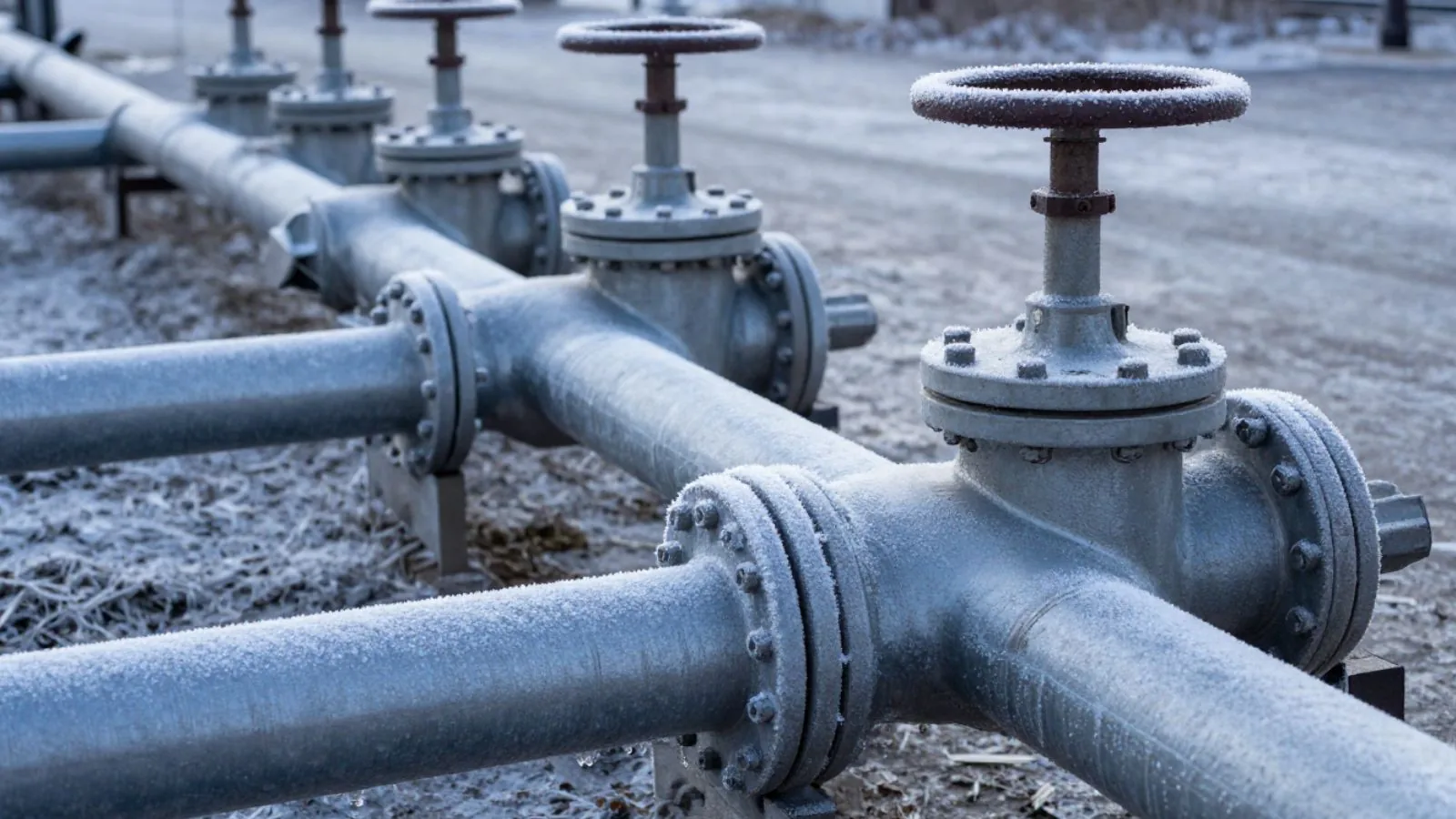
Frozen pipe water damage in Seaford, NY is the flooding that follows when ice blocks a supply line, the pipe splits, and water pours out as the ice melts. The split is usually not the moment of damage. The leak begins at thaw, often hours after the pipe cracked. The dispatch line is open 24/7.
If a pipe is frozen but still intact, do not force it. Shut the main valve now if water is already showing. Keep cabinet doors open and stay out of any wet room with exposed electrics.
Frozen pipe emergency: what to do right now
Speed matters because a cracked pipe under ice pressure leaks heavily once it thaws. Treat any sign of wetness near a frozen line as urgent and act in this order.
- Close the main shutoff valve to stop flow into the split.
- Open the nearest faucet so water has somewhere to go as ice melts.
- Keep the area warm with ordinary household heat. Do not use open flames or a propane torch on a pipe.
- Photograph the frozen section, any frost or bulging, and every wet surface.
- Call a plumber for the pipe and the restoration line for the water.
How freezing splits a pipe
Water expands as it turns to ice. The ice itself rarely bursts the pipe where it forms. Instead, ice blocks the line and traps water between the blockage and a closed faucet, and the pressure of that trapped water rises until the pipe wall gives way.
That is why the split often sits several inches from the visible frost. Pipes in unheated spaces such as exterior walls, crawl spaces, garages, attics and basements near foundation vents are the usual victims.
Pipe thawed and water is showing up? Close the main valve, then call the dispatch line and describe where the water is.
Call (516) 845-9582How often hard freezes happen on Long Island
NOAA's 1991 to 2020 climate normals for Islip MacArthur Airport, the nearest long-record station reached, show an average of 98.3 days a year with a minimum temperature at or below 32 degrees Fahrenheit. That is roughly three months of freezing nights, so pipe protection belongs in your fall routine instead of your emergency plan.
Before the first cold snap, disconnect garden hoses, insulate exposed lines, and know where your main shutoff is. If you are leaving for several days in winter, keep the heat on.
Signs a pipe has frozen or split
Early signs are easy to miss. A faucet that gives only a trickle, frost on an exposed line, or a bulge in the pipe all point to ice. Strange smells from a drain can also mean frozen waste lines.
After thaw, look for water stains on walls, ceilings that drip or sag, a floor that feels damp, and a water meter that moves with everything off. A thermal imaging camera helps trace the leak behind finishes without opening every wall.
How the loss is assessed and dried
Crews first confirm the leak is controlled, then extract any standing water with extraction units. The assessment uses a moisture meter and thermal imaging to follow the water path from the split into walls, cabinets and floors.
Drying equipment is then set according to the moisture map. Air movers and LGR dehumidifiers run for several days, with readings taken daily until materials reach their dry standard. Wet insulation or soaked drywall is cut out where it cannot dry in place. The water extraction page explains the first step in detail.
Dry in place or tear out: honest trade-offs
| Situation | Usual approach | Trade-off |
|---|---|---|
| Leak found within hours, wall only damp | Dry in place with air movers and dehumidifiers | Cheaper and faster, needs daily readings |
| Leak ran overnight into a cabinet or floor | Remove toe kicks and baseboards, dry cavities | More access work, better results |
| Insulated exterior wall soaked | Remove wet insulation and drywall | Higher cost, avoids hidden moisture |
| Ceiling below a bathroom saturated | Cut open the ceiling, dry the joist bay | Rebuild follows, see ceiling repair |
| Pipe cracked but not yet leaking | Plumber repairs before thaw | No water damage if caught early |
What drives the price of frozen pipe cleanup
Several factors set cost: the water category (clean supply water is category 1), how many rooms and levels the thaw water reached, which materials are wet, and the days of drying equipment. Access matters because pipes in exterior walls or crawl spaces take more labor to reach.
Rebuild scope for drywall, insulation, paint and flooring is separate work. Scope and price are explained before work starts, and a call gives a real number once the crew knows how far the water spread.
How insurance often treats frozen pipes
Many policies cover sudden freezing and bursting, and some require that the home was kept heated. Damage from long neglect often is not covered. Wording varies, so check your policy or ask your insurer about frozen pipe conditions.
New York's Department of Financial Services recommends documenting damage before cleanup and filing promptly. Keep the split pipe section, photograph the thermostat setting and save receipts. Approval is the insurer's decision.
What we do not do
Restoration crews do not repair or re-pipe plumbing. A licensed plumber must fix the split. We also do not thaw pipes with open flame, and you should not either.
If the leak is large and mechanical, the situation resembles a burst pipe event. If water came through a ceiling, see ceiling water damage repair. For where crews respond, see the service area page.
Frequently asked questions
Do you handle frozen pipe emergencies at night or on weekends in Seaford?
Yes. The dispatch line takes calls at any hour. Close the main valve if water is showing, then call and describe where the thaw leak is. Freezing nights are exactly when these calls come in.
Is a frozen pipe always going to burst?
No. Many frozen pipes thaw without splitting. The risk is higher when the pipe is rigid, the blockage is long, or a closed faucet traps water under pressure. If a frozen line is not leaking yet, a plumber can inspect it before it fails.
Is it safe to thaw a pipe myself?
Gentle warmth from a hair dryer or warm towels on an exposed section can work, with the faucet open. Never use an open flame, a propane torch or a heat gun that could scorch framing, and never thaw near standing water or wet electrics.
My pipe stopped dripping. Is the damage over?
Not necessarily. Water may have soaked insulation, drywall and subfloor. A moisture meter reading is the only reliable way to know. If any wall, ceiling or cabinet floor felt wet, have it checked before it is closed up.
Can I leave a faucet dripping to protect pipes?
A slow drip on an exposed line during a hard freeze keeps water moving and relieves pressure, and many plumbers suggest it. It does not replace insulation or heat. Do it only on lines at risk, and shut water off if you will be away.
Will my insurer cover frozen pipe damage?
Often, if the freeze was sudden and the home was heated. Gradual damage or an unheated vacant house may be treated differently. Read your policy, call your insurer promptly and keep photographs. Our crew can document readings and scope for your claim.
Thaw leaks hide behind walls and cabinets. Call now and a crew will explain scope and price before work begins.
Call (516) 845-9582