
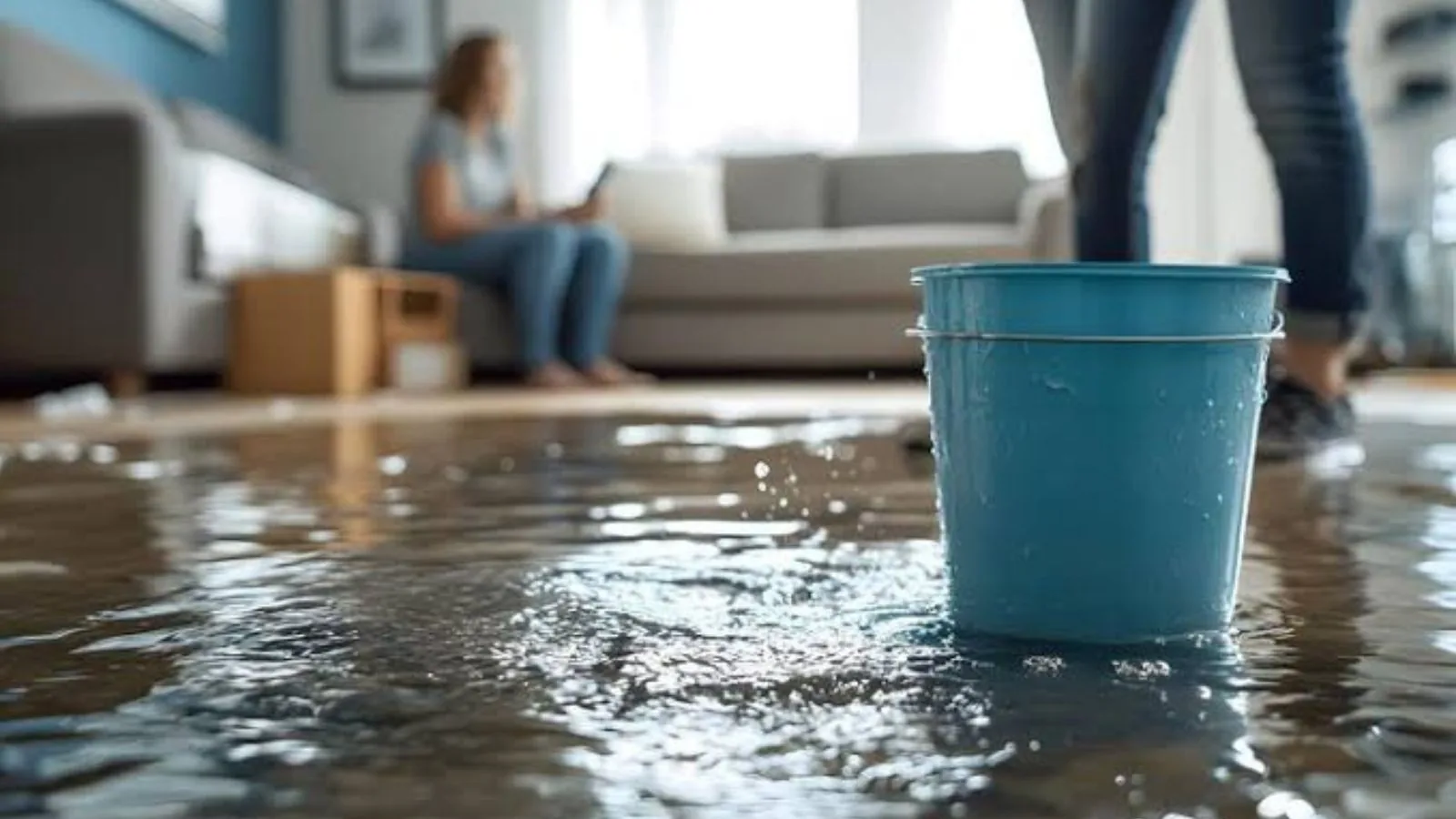
Water extraction in Seaford, NY is the removal of standing water from a home or building using pumps, extraction units and weighted wands, before it wicks into drywall, subfloors and framing. If water is on your floor right now, the clock is already running. The dispatch line is open 24/7.
While you wait, keep everyone out of the wet area and do not touch outlets, cords or appliances standing in water. Photograph the water level and each affected room before anything is moved. If a supply line is still running, close the main shutoff. Liberty Utilities lists Seaford among the communities in its Merrick water system, so check your bill to confirm your provider and call them if the valve will not turn.
Removing standing water is the first stage described in ANSI/IICRC S500, the published standard for water damage restoration, and it is the stage that most affects how long drying takes afterward.
When standing water is an emergency
Not every wet floor needs a pump. A cup of water under a dripping fitting can be mopped. Water that covers the floor, runs under walls or keeps arriving needs extraction now, because wicking into baseboards and subfloor starts within hours.
- Water covers most of a room's floor or is deeper than the baseboard
- Water is still entering from a pipe, appliance, sump pit or doorway
- Carpet squishes underfoot or a pad is saturated
- Water has crossed a wall into the next room or dripped to a floor below
- The water is gray, dark or smells like a drain (treat it as contaminated)
Signs the water is deeper than it looks
Surface water is only part of the loss. Drywall pulls moisture upward like a wick, so a floor that looks dry after mopping can still hide a wet wall cavity. A pin-type or pinless moisture meter reads the real number inside the material.
Watch for paint that bubbles at the base of a wall, laminate edges that lift, a musty smell that returns after cleaning, and a ceiling stain in the room below. Any of these means water went somewhere the mop did not reach.
Water still pooled on the floor? Call the dispatch line and describe how deep it is and which rooms it has reached.
Call (516) 845-9582How water is actually removed
The tool depends on depth, surface and what the water carries. Crews match the equipment to the job instead of running one machine everywhere.
Submersible and trash pumps
Several inches or more of water in a basement or crawl space goes to a submersible pump with a hose run to a suitable discharge. Pumps clear bulk volume quickly but leave a film on the slab.
Portable extraction units
Electric or gas extraction units use strong vacuum to lift water out of carpet, pad and hard floors. Weighted wands press carpet down while pulling water from the pad beneath, which a household wet-vac cannot do well.
Moisture meters and thermal imaging
After the visible water is gone, a thermal imaging camera shows cool wet zones behind walls and under floors. A moisture meter confirms them with a reading, and those readings become the drying plan. Extraction is step one of structural drying, not the finish line.
Which removal method fits your situation
| Situation | Usual method | What follows |
|---|---|---|
| Several inches in a basement | Submersible pump, then extraction unit | Dehumidifiers and air movers, see basement cleanup |
| Soaked carpet and pad | Weighted wand extraction, pad often removed | Carpet drying or replacement decision |
| Hard floor with a thin film | Squeegee and vacuum extraction | Moisture mapping of subfloor |
| Water from a toilet or drain backup | Contained extraction with protective gear | Removal of porous materials |
| Rising outdoor water | Pump only after levels recede | Flood-style cleanup and disinfection |
Why the water category changes the job
Industry practice grades water by its source. Category 1 comes from a clean supply line. Category 2 carries some contamination, such as a washing machine drain. Category 3 is grossly contaminated, including sewage and floodwater.
Category 3 water means porous materials like carpet and pad are usually removed rather than saved. If the source was a drain, see sewage backup cleanup. If it came from outside, flood damage restoration covers the extra steps.
Electrical and gas safety before you wade in
Water and electricity do not mix, and a wet basement often has outlets, a panel and appliances in reach. Do not step into standing water if any cord, outlet or appliance is submerged or the panel is wet.
Cut power at the panel only if the panel is dry and you can reach it without touching water. If you smell gas, see sparks or cannot reach the panel safely, leave the building and call 911 and the utility before calling the restoration line.
What sets the price of an extraction job
Cost follows the size of the problem, not a flat rate. The main factors are the water category, the area affected, how deep the water is, and whether pad, baseboards or drywall must come out.
Equipment days matter too. Extraction is often a few hours, but the drying that follows can run several days with air movers and LGR dehumidifiers, and any rebuild is separate. Scope and price are explained before work starts, and a call gives you a real number for your situation.
How insurance usually treats standing water
Coverage depends on where the water came from. Sudden and accidental events, such as a supply line failing, are often covered. Gradual leaks and neglected maintenance often are not, and flood is usually excluded.
New York's Department of Financial Services says a typical homeowners or renters policy does not cover flood damage. Photograph everything before cleanup, keep damaged items until the insurer says otherwise, and ask your insurer about water back-up or flood coverage. Check your policy for the exact wording.
What extraction does not cover
Pulling water out does not fix what let it in. A split pipe needs a plumber, a failed sump pump needs a new pump, and a leaking roof needs a roofer. Restoration crews dry and clean the building, and they work alongside those trades.
Extraction also does not rebuild finishes. Once materials are dry, drywall, flooring and paint are separate repair work. For a ceiling that let water in, see ceiling water damage repair.
A note on wet years and sump pits in Seaford
NOAA's 1991 to 2020 climate normals for Islip, the nearest long-record station reached, put annual precipitation at about 46 inches. That is a lot of rain landing on a flat coastal area, so test a sump pump before a forecast storm instead of after.
Pour a bucket of water into the pit and watch it switch on and discharge. If a basement already has water, basement water damage cleanup covers the below-grade details, and the service area page shows where crews respond.
Frequently asked questions
Do you handle water extraction emergencies at night or on weekends in Seaford?
Yes. The dispatch line takes calls at any hour, including nights, weekends and holidays. Tell the dispatcher how deep the water is, whether power is on, and where it started. That lets them send the right pumps and extraction units.
Can I just use a wet-vac and fans myself?
For a spill of a few cups, yes. For anything larger, a household wet-vac cannot pull water from carpet pad or from under baseboards, and fans alone push moisture into walls. A moisture meter is the only way to know the structure is actually dry.
How long does extraction take?
Removing standing water is often a matter of hours for a single room and longer for a flooded basement. Drying afterward is a separate phase that usually takes several days, and the crew confirms it with moisture readings instead of guessing.
Is it safe to walk through the water to get my belongings?
Not until you know the power situation and the water category. Submerged outlets or cords can energize the water, and gray or dark water can carry contamination. Stay out, photograph from the dry edge, and let the crew handle it with proper protective gear.
Will my carpet and pad be saved?
It depends on the water source and how long it sat. Clean-water carpet extracted quickly can often be dried in place, while pad is often replaced. Contaminated water usually means removal. The crew can explain the call after taking readings. See carpet water damage restoration for the options.
Do I need to move furniture before you arrive?
Only light, safe items from dry spots, and do not lift anything heavy from wet floors. Put aluminum foil or plastic under furniture legs so stain does not transfer to wet carpet. Leave the rest for the crew, who will block and lift items as needed.
The longer water sits, the further it wicks into framing. Call now and get a scope and price explained before any pump is switched on.
Call (516) 845-9582