
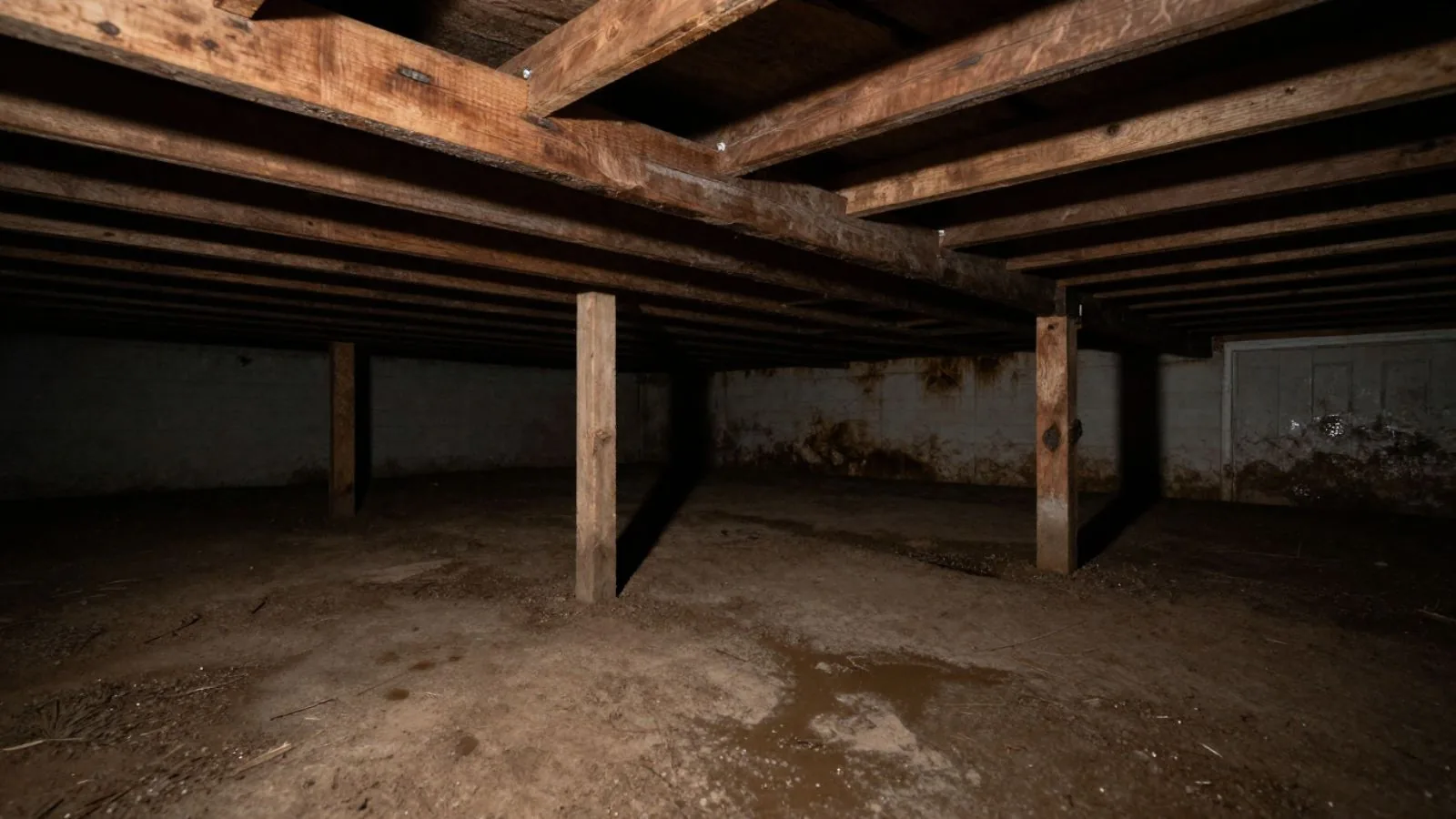
Crawl space water damage in Seaford, NY is moisture damage to the shallow void under a floor, including the joists, subfloor, insulation, ductwork and vapor barrier. A crawl space is usually 18 to 36 inches high, closed off from daily view, and lined with soil or a thin concrete skim. Water enters from plumbing, groundwater, surface runoff or humid air, and then sits where nothing dries it.
Signs the space under your house is wet
Because few people look under the floor, crawl space problems tend to surface as symptoms in the rooms above.
- A musty smell that is stronger near floor vents or in the hallway above the access hatch.
- Floors that feel cold, soft or bouncy, or hardwood that cups along one side of the house.
- Fiberglass insulation sagging between joists or lying on the ground.
- Visible standing water, wet soil, or white mineral crust on foundation walls.
- Rust on ducts, nails and fasteners, or fuzzy growth on the joist faces.
A flashlight through the access hatch tells you a lot. If you see standing water near electrical wiring or a furnace, stay out and call.
Where the water comes from
Four sources account for most wet crawl spaces, and the fix depends on which one you have.
Plumbing leaks
Supply and drain lines run in the joist bays. A small drip over months soaks insulation and rots the subfloor, while a burst line floods the space in hours. See burst pipe water damage.
Groundwater and runoff
Rain, a high water table or poor grading pushes water through foundation walls and vents. NOAA's 1991 to 2020 normal at Islip airport, the nearest long-record station reached, is about 46 inches of precipitation a year. Check where your downspouts discharge, and extend them away from the foundation.
Humid air
Warm, damp air meeting cool surfaces condenses on ducts and joists. Open vents do not always help, and in humid weather they can bring in more moisture than they remove.
Seeing water or sagging insulation through the access hatch? Call the dispatch line and tell us what the space looks like.
Call (516) 845-9582How a wet crawl space is assessed and dried
Moisture meters read joist and subfloor moisture content, and a thermal imaging camera picks out wet insulation and cold spots. A hygrometer measures the relative humidity in the void. A crew wearing protective gear crawls in to photograph conditions before anything is removed.
Submersible pumps or an extraction unit handle standing water. Air movers drive air across joists, and LGR dehumidifiers bring humidity down, often with ducting so the space can be dried while closed. Wet fiberglass is bagged and removed, and a HEPA air scrubber can be used if dust or growth is disturbed.
| What you find | What it suggests | Typical response |
|---|---|---|
| Standing water on soil | Groundwater, runoff or a plumbing failure | Extract, find the source, then dry. See water extraction |
| Wet or sagging insulation | Leak above or high humidity | Remove insulation, dry joists, replace later |
| Damp joists, no standing water | Humidity or slow seepage | Dehumidify with meters tracking progress |
| Fuzzy growth on wood | Prolonged moisture | Treat as a mold job. See mold remediation |
Dry, encapsulate or rebuild: honest options
Drying brings wood moisture down, but it does not stop new water. A sealed vapor barrier on the ground and walls, a sump pump or a drainage fix addresses the source. Those are building and drainage jobs that follow drying, not restoration itself.
Structural wood that stayed wet for a long time can lose strength, and a contractor or engineer should judge it. Sound joists are dried and kept. Soft or crumbling ones are replaced. The comparison between drying and tearing out is covered in more detail under structural drying and dehumidification.
Flood zones and low ground
Nassau County's hazard mitigation plan lists Seaford among communities with mapped coastal high hazard zones, and the National Weather Service recorded canal overflows in Seaford during Hurricane Irene in August 2011. A ground-level void is one of the first places surface and tidal water can reach.
The practical step is to check the FEMA flood map for your address and ask your insurer about separate flood coverage. If rising water is what filled the space, see flood damage restoration.
What sets the price of crawl space water damage work
Access is the first factor, since a 24 inch crawl takes more labor than a tall one. After that come the water category, the square footage, how much insulation and subfloor must come out, and how many drying days and dehumidifiers are needed.
Rebuild scope such as new insulation, a vapor barrier or joist sistering can exceed the drying itself. Scope and price are explained before work starts, and a call gives a real number once we know what the space looks like.
A general note on insurance
Sudden and accidental water, such as a burst pipe, is often covered. Seepage over time, groundwater and flood are often excluded. NY DFS says a typical homeowners or renters policy does not cover flood, which needs a separate flood policy or a specific endorsement.
Check your policy and ask your insurer. Photograph the space before cleanup and hold off on permanent repairs until the insurer has had the chance to inspect. We cannot promise any claim result.
What we do not do
We do not install sump systems, regrade yards, encapsulate with permanent liners as a building trade, or repair plumbing and foundations. Those belong to contractors, plumbers and engineers.
Under New York's mold licensing law, a mold project over 10 square feet generally needs a licensed assessor and a licensed remediation contractor who are not the same company. Owners of their own homes are exempt for their own property, but hiring out the work triggers the rules. Ask us about the process at any time.
Before you hire for a crawl space
Ask any company whether its crews follow ANSI/IICRC S500 for water and S520 for mold, and ask to see moisture readings before and after. Our service area page lists the towns we cover, and the contact page explains how to reach dispatch.
Frequently asked questions
Is a damp crawl space normal?
Some humidity is common, but visible water, dripping insulation or a strong musty smell is not. A moisture meter reading on the joists is the quickest test. Wood above about 19 percent moisture content is a warning sign, and a crew can check it for you.
Can wet insulation under my floor be saved?
Usually not. Fiberglass that has been soaked slumps, holds water against the subfloor and keeps the joists wet. It is removed and replaced after the space is dry. Dry insulation that only sagged may be reinstalled.
How long does it take to dry a wet crawl space?
Many jobs take 3 to 7 days of dehumidifiers and air movers, depending on the source, soil moisture and wood condition. We log readings each visit and tell you when the numbers are done. The ANSI/IICRC S500 standard sets the method.
Should I put a fan or space heater under the house?
No. A household fan does little, and heaters near insulation, wiring and damp wood create fire risk. Professional air movers and LGR dehumidifiers are built for the conditions. If water stands near wiring, stay out entirely.
Will the smell go away after drying?
Often the smell fades as moisture drops, but if growth or contaminated materials remain, it can linger. Health questions about mold belong with a physician. If growth is found, mold remediation is handled as its own step.
Can I get help with crawl space water in Seaford right away?
Availability is confirmed when you call. Standing water is worth a prompt call, while a slow smell can be scheduled. Either way, scope and price are explained before any equipment enters the space.
Call to have the crawl space scoped. Scope and price are explained before any pump or dehumidifier is set up.
Call (516) 845-9582