
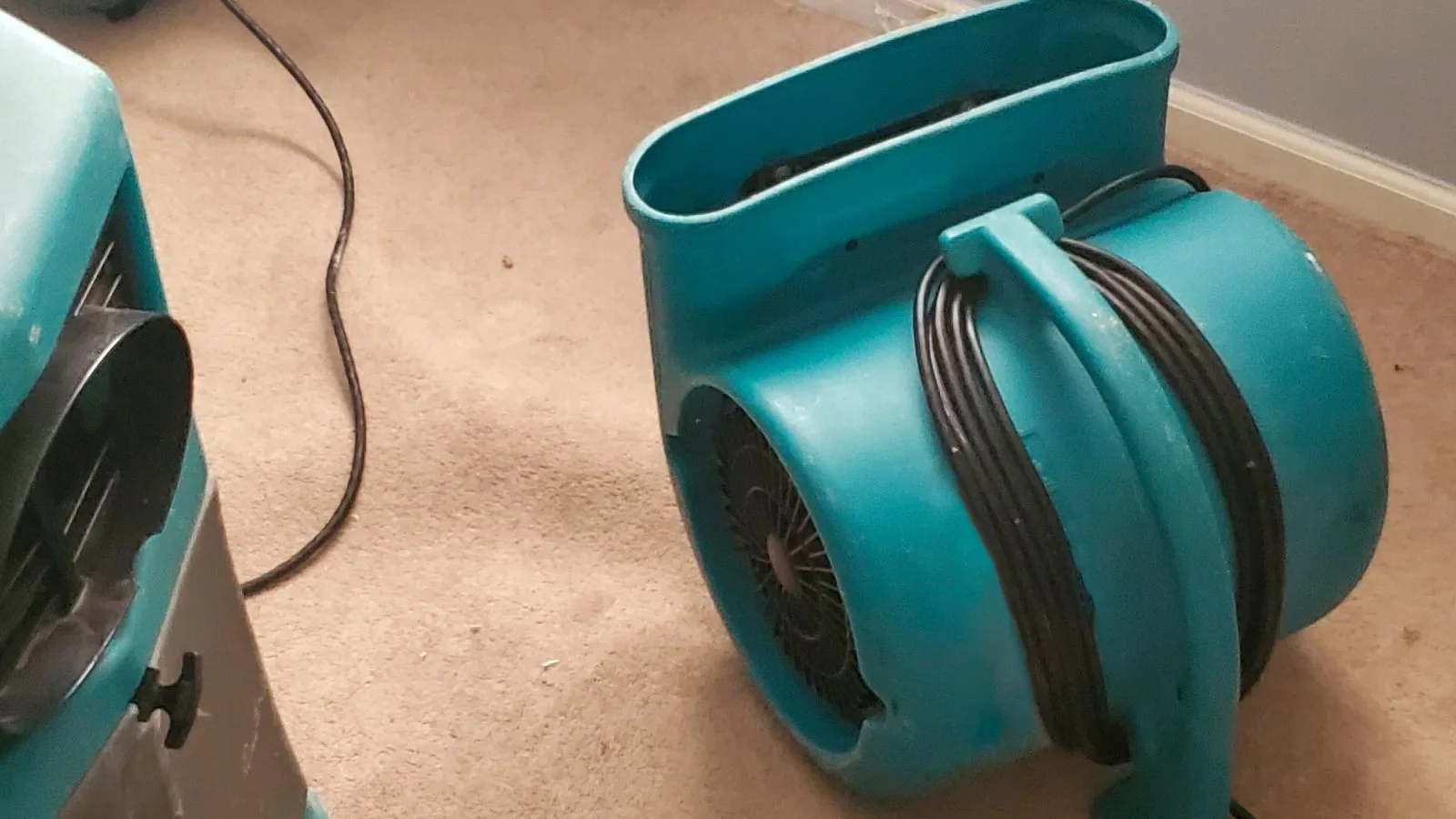
Carpet water damage restoration is the process of pulling water out of wet carpet and its padding, drying both in place when that is practical, and removing what cannot be dried. If you are standing on a squishy floor in Seaford, NY, the main question is whether the water was clean, and how long the carpet has been wet. Those two answers decide almost everything that follows.
Until we reach you, shut off the source if it is safe, and move furniture off the carpet. Place foil or plastic under furniture legs so they do not stain the fibers. Do not use a household vacuum on wet carpet, because that is an electrical risk.
How to tell your carpet is wet beyond the surface
Carpet is a layered system, with face fibers on top, a backing, a foam or fiber pad below, and a subfloor under that. Water drains through the top and sits in the pad like a sponge. A carpet can feel only damp on top while the pad underneath is holding a lot of water.
Press a dry towel into the carpet and stand on it. If the towel comes up wet, there is more water below than you can see. Other signs include a sour smell after a day or two, dark rings along walls, rippling or loose areas where the backing has let go, and brown stains rising to the surface from the pad.
Water category decides whether carpet can be saved
Industry practice, set out in ANSI/IICRC S500, sorts water into three categories. Category 1 is clean water from a supply line or overflowing sink. Category 2 carries some contamination, such as washing machine discharge. Category 3 is grossly contaminated, such as sewage or floodwater. You can ask any restoration company whether its crews follow S500.
For carpet, the rule of thumb is simple. Clean water caught within a day or so often allows drying in place. Category 2 water usually means the pad comes out and the carpet needs deep treatment or replacement. Category 3 means the carpet and pad are removed, no matter how new they are. If the source was a sewage backup or flood, do not try to save it yourself.
Not sure whether your carpet is worth saving? Call and describe the water source and how long it has been wet. We will give you a straight answer.
Call (516) 845-9582How we extract and dry wet carpet
We begin with extraction. A truck-mounted or portable extraction unit pulls water from the fibers and the pad, and a weighted wand can force more water out than a household wet vac. A moisture meter and a thermal imaging camera then show how far the water spread under the carpet and into the baseboard line.
For carpet that can stay, we float it. That means lifting a corner from the tack strip, supporting it on air so it dries from both sides, and often removing the pad, which is cheap to replace and slow to dry. Air movers push air under and across it, and LGR dehumidifiers pull the humidity out of the room. We check readings each visit and stop only when the subfloor and carpet backing are dry.
Dry in place, float it, or replace it
The choice depends on contamination, time and carpet type. Use this table as a guide, not a verdict, because the meter readings on site decide.
| Situation | Usual approach | What to weigh |
|---|---|---|
| Clean water, under 24 hours | Extract, float carpet, dry pad or replace pad | Best chance of keeping the carpet |
| Clean water, 2 to 3 days | Extract, remove pad, dry carpet and subfloor | Odor risk rises, results vary by fiber |
| Category 2 water | Remove pad, deep clean or replace carpet | Cleaning cost against replacement cost |
| Category 3 water | Remove and dispose of carpet and pad | No exceptions for age or price of carpet |
| Glued-down or commercial carpet | Cut out and dry the slab, replace section | Adhesive and slab moisture slow the job |
What happens to the pad, and why it is often replaced
The pad is the weak link. It holds water, it dries slowly, and it costs far less than the carpet above it. In most water losses we recommend replacing the pad even when the carpet itself is saved.
Foam pad can sometimes be dried if the water was clean and recent. Rebond pad, the chunky multicolored kind, tends to hold moisture longer and is usually replaced. If the carpet stays, a fresh pad goes under it and the carpet is restretched to remove ripples and reseated on the tack strip.
Carpet over a slab, a basement or a wood subfloor
What lies under the carpet changes the job. Over a wood subfloor, moisture can soak into the plywood and sit between the layers, so we check subfloor readings and sometimes open small sections. Over a concrete slab, water moves more slowly through the concrete, and a slab can stay damp for days after the carpet feels dry.
In a basement, groundwater can keep supplying moisture to a slab, so drying the carpet alone will not fix a recurring problem. If this is a below-grade room, our basement water damage cleanup page covers sump failure and seepage in more detail. Source control is a plumber or waterproofing job, and drying only works once the water stops.
What sets the cost of carpet restoration
Price depends on the water category, the square footage affected, the carpet type and the number of drying days. Equipment count matters too, since a larger wet area needs more air movers and dehumidifiers running for longer. Replacing a pad is usually a smaller line than replacing carpet, and stairs and patterned carpet add labor.
A second factor is the rebuild. If the baseboards need to come off to dry the wall cavity, or if the subfloor needs drying or repair, that adds scope. Scope and price are explained before work starts, and a call to the dispatch line gets you a real number for your rooms.
Carpet and your insurance policy
A sudden and accidental event, such as a washing machine hose bursting, is often covered, while gradual leaks and neglect often are not. Flood damage is usually excluded, and the New York State Department of Financial Services says a typical homeowners or renters policy does not cover flood. Ask your insurer whether you have a water back-up endorsement or a separate flood policy.
Photograph the wet carpet before it is moved, note the date and the cause, and keep any receipts. The DFS advises documenting damage before cleanup and not making permanent repairs until your insurer has inspected. We keep drying logs, and we cannot promise how a claim will be decided.
What we do not do
We do not fix the leak itself. If a dishwasher, washing machine or refrigerator line caused the loss, that is an appliance or plumbing repair, and our appliance leak page explains how we work around it. We also do not install new carpet as a flooring contractor, though we can remove the old and prepare the room.
We will not tell you a carpet is salvageable when the readings or the water category say otherwise. A bad carpet kept in place can leave an odor that is expensive to fix later.
Carpet help for Seaford homes
Census QuickFacts puts the median owner-occupied home value in Seaford at $658,300, and owners are about 93 percent of households. For a home at that value, it makes sense to ask for a written scope that separates carpet cleaning from carpet replacement, so you can compare it to your insurer's figure.
We serve Seaford and nearby towns. If you are not sure we cover your street, check our service area page or contact us before you call.
Frequently asked questions
How fast do I need to act on soaked carpet?
As soon as you can. Clean water caught within the first day gives the best chance of saving carpet. After 48 to 72 hours, odors and discoloration become likelier, and some fibers delaminate from the backing. Call the dispatch line, describe the source, and we will tell you what to do while you wait.
Can I save my carpet and just replace the pad?
Often, yes, when the water was clean. The carpet is lifted, dried on both sides with air movers, and reinstalled over a new pad. If the water was Category 2 or 3, or the carpet has sat wet for days, replacement is usually the safer call.
Will wet carpet grow mold?
It can, if it stays wet for several days. That is why drying quickly matters. If you see or smell mold, stop and read about our mold remediation work, because mold on materials needs to be assessed under New York rules before it is removed.
Do you clean carpet after water damage?
We can extract and treat carpet that is still worth saving, but a cleaning does not fix a wet pad or a damp subfloor. Drying is done first. We then confirm readings and recommend cleaning only where it is useful.
My carpet dried by itself. Is it fine?
Maybe not. The surface can dry while the pad and subfloor stay damp. A moisture meter reading tells you for certain. If a musty smell remains, or the floor feels cool and soft, there is probably moisture below the carpet.
Can wet carpet be saved after sewage or floodwater?
No. Carpet and pad that touched sewage or floodwater are removed and discarded, even if they look clean afterward. Contaminated water carries bacteria that cannot be reliably cleaned out of the fibers. Keep children and pets away, and call us for removal.
Wet carpet and pad get harder to save every day. Call the dispatch line for a plan, a scope and a real price before work starts.
Call (516) 845-9582