
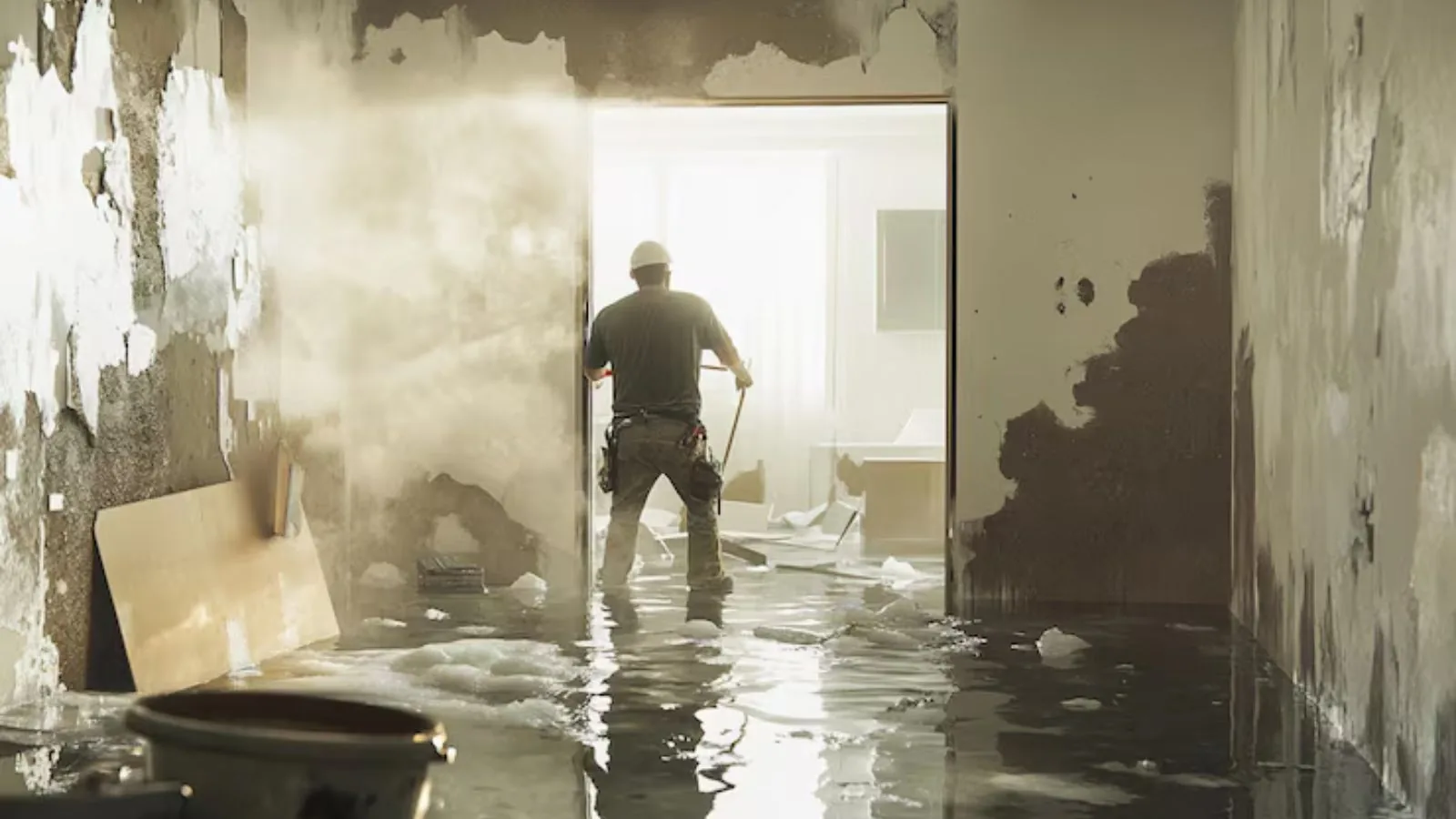
Flood damage restoration in Seaford, NY is the cleanup of homes and buildings after rising water, whether tidal, surface runoff or groundwater, has entered. Floodwater is treated as Category 3, grossly contaminated, because it carries street runoff, soil and sewage. The dispatch line is open 24/7.
Do not walk through floodwater. Stay out until you know the power and gas situation, and wait for water outside to recede before pumping begins. Photograph the high-water line on walls and note the time you first saw water.
When floodwater is an emergency right now
Flooding is an emergency when water is still rising, when it reaches outlets or the panel, or when it has entered living areas. Pumping while levels outside are higher than inside can damage a foundation, so timing matters as much as speed. Homeowners in canal-side Seaford Harbor can read what local sources say about tidal and drain water there.
- Water is rising or keeps returning with the tide or rain
- Outlets, appliances or the electrical panel are wet or submerged
- A furnace, water heater or fuel tank has been in the water
- The water is dark, smells like sewage or carries debris
- Anyone in the home is elderly, ill or cannot evacuate
Safety first: electric, gas and contamination
Floodwater and electricity are a deadly combination. If water has reached outlets, cords or the panel, do not enter. Cut power only if the panel is dry and reachable without stepping in water. If not, leave and call 911 and the utility before calling the restoration line.
Smell gas or see sparks, get out and call 911. Wear boots and gloves if you must enter after power is confirmed off, and keep children and pets out. Health questions about exposure belong to a physician.
Floodwater in the house? Stay out of it, deal with any electrical or gas risk first, then call the dispatch line.
Call (516) 845-9582What Seaford's flood history tells you to check
Seaford sits on the south shore, and the record shows why flood prep is practical. The National Weather Service's Freeport impacts sheet for Hurricane Irene on August 28, 2011 lists canal overflows in East Rockaway, Seaford and Freeport. Look up your elevation and whether your street floods in a storm tide.
The USGS reports that Superstorm Sandy on October 29, 2012 brought widespread record coastal flooding to the western bays of southern Nassau, exceeding FEMA 100-year base flood elevations at gauges. If your property is near the bays, check the FEMA flood map for your address and confirm your flood zone before the next storm.
The county plan and your flood zone
Nassau County's Hazard Mitigation Plan lists Seaford among communities with mapped V-zones, and the county rates flooding and coastal hazards as highly likely, meaning one or more events per year. Those are county-level findings, so they do not tell you your own risk.
Use them as a prompt. Check the FEMA flood map for your address, ask your insurer which zone you are rated in, and keep documents above the lowest floor. The service area page lists nearby towns crews cover.
How flood cleanup works
Once it is safe, crews pump out water with submersible pumps and extraction units, working down so a structure is not stressed by uneven water levels. Muck and silt are shoveled and removed, and the building is photographed for records.
Porous materials soaked in floodwater, including carpet, pad, insulation and low drywall, are usually removed. Hard surfaces are cleaned and treated with EPA-registered disinfectants. Then moisture meters and thermal imaging guide placement of air movers, LGR dehumidifiers and HEPA air scrubbers, with daily readings until dry. See structural drying for the process.
What can be saved and what cannot
Contents are sorted by value and porosity. Photograph items before disposal, since your insurer may ask.
| Material | Usual outcome | Why |
|---|---|---|
| Carpet and pad | Removed | Porous, holds contaminants |
| Fiberglass insulation | Removed | Absorbs and keeps water |
| Drywall wet above the floor | Cut out to a safe height | Wicks water and contamination |
| Solid wood framing | Cleaned and dried | Dense, can dry with care |
| Hardwood flooring | Case by case, often removed | Cupping and contamination |
| Concrete slab | Cleaned and dried | Non-porous surface |
Flood versus sewage backup versus plain water
Flood comes from outside rising water. Sewage backup comes up through drains and may happen without flooding, and its cleanup is covered on sewage backup cleanup. Clean-water leaks from a supply line are a separate case, handled in basement water damage cleanup when below grade.
The cause matters for both safety and insurance. Describe exactly how the water arrived when you call.
What sets the price of flood cleanup
Cost depends on the water category (floodwater is 3), the area and depth affected, the materials that must be removed, the days of drying equipment and the rebuild scope afterward. Debris and silt removal adds labor, and tidal events can leave salt residue on surfaces.
Scope and price are explained before work starts, and a call gives you a real number once the crew understands how high the water went.
Insurance and flood: read this before you file
New York's Department of Financial Services states that the typical homeowners or renter's policy does not cover flood damage. Coverage may come from a water back-up or sewage endorsement or from a National Flood Insurance Program policy. Check your policy for either.
DFS advises filing as soon as possible, documenting damage before cleanup, and making no permanent repairs until the insurer inspects. If you have no flood coverage, ask your insurer what applies, and never assume a claim will be approved.
What flood cleanup does not include
Restoration crews dry and clean. We do not rebuild structures, raise houses, repair seawalls or replace electrical panels and heating equipment. Those need licensed trades and, where required, permits.
Ask the Town of Hempstead Department of Buildings about permits for repairs to a flooded structure. If mold shows up after drying, see mold remediation.
Frequently asked questions
Do you handle flood damage emergencies at night or on weekends in Seaford?
Yes. The dispatch line takes calls at any hour. Tell the dispatcher whether water is still rising, whether power is on and whether the water looks contaminated. No arrival time is promised during storms.
Should I start pumping out the water myself?
Not while water outside is still high. Pumping a basement too fast can put pressure on foundation walls, and entering before power is confirmed off is dangerous. Wait for levels outside to recede, then call for staged removal.
How do I find my flood zone?
Use the FEMA Flood Map Service Center and enter your address to see your mapped zone. Your lender or insurer can also confirm it. Zones vary block by block, so a neighbor's result is not yours. Check the map before buying flood coverage.
Does homeowners insurance cover flood?
Usually not. New York DFS says a typical homeowners or renter's policy does not cover flood damage. A separate flood policy or an endorsement for water back-up may. Read your policy, call your insurer promptly and document everything before cleanup.
Can I keep my belongings after a flood?
Hard items like glass and metal can often be cleaned. Soft items such as mattresses, upholstered furniture and carpet are usually discarded. Photograph before disposal and ask your insurer what documentation it needs.
How long until the house is dry?
Extraction takes hours to a day. Drying afterward usually takes several days, depending on materials and humidity, and the crew confirms it with moisture readings. Rebuild work starts only after the structure meets its dry standard.
Floodwater cleanup moves fast because contamination sets in. Call now and scope and price are explained before work starts.
Call (516) 845-9582