
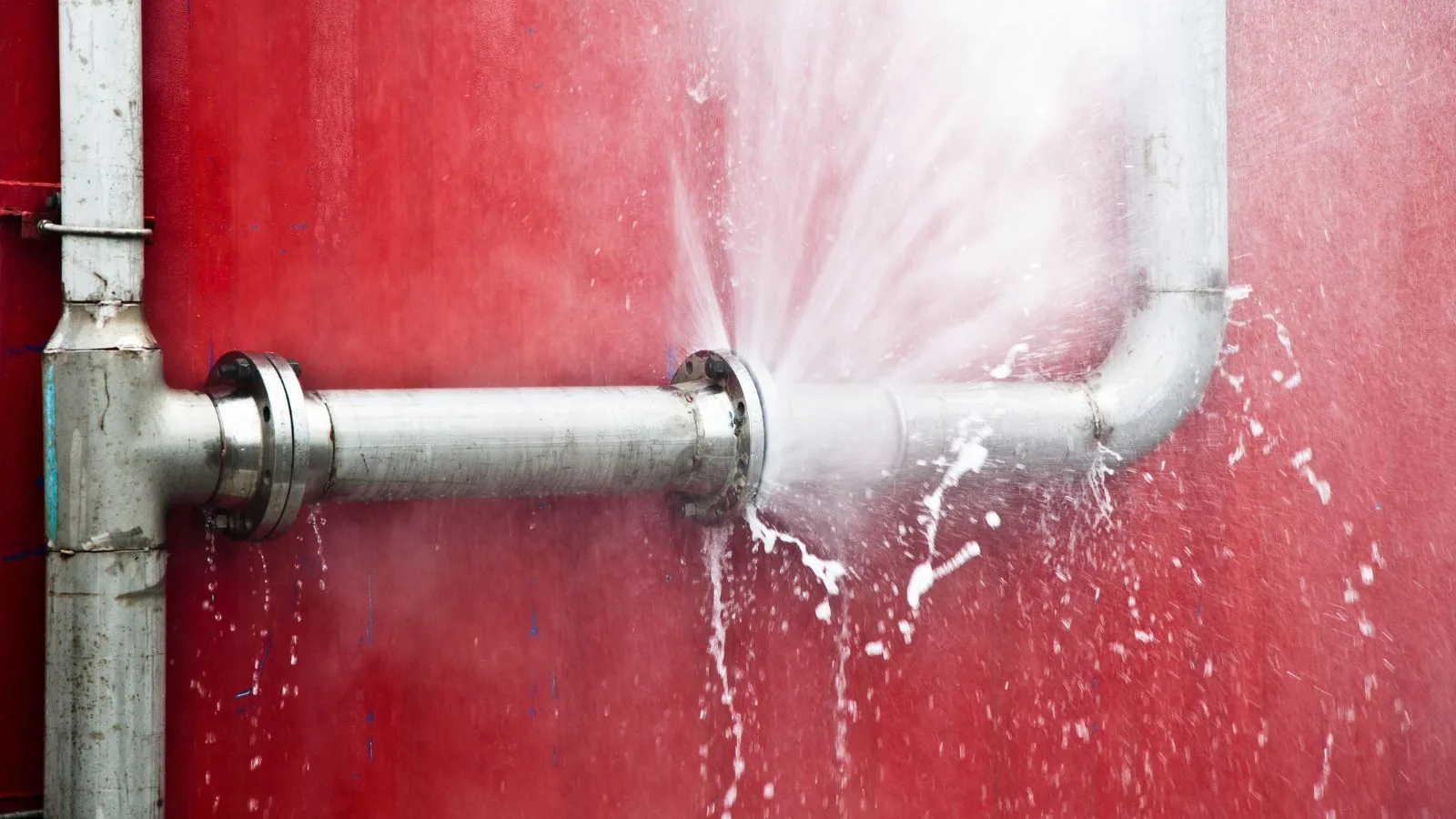
Burst pipe water damage in Seaford, NY is the flooding, soaking and material loss that follows when a pressurized supply line splits or a fitting blows apart. Household lines commonly run at 40 to 80 psi, so a failed pipe sprays far more water than a slow drip ever would. The dispatch line is open 24/7.
Do these three things while you wait. Close the main shutoff valve, then open a low faucet to drain remaining pressure. Stay out of any room with water near outlets. Take photographs of the damage before you move anything.
Professional water jobs of this kind are guided by ANSI/IICRC S500, the published standard for water damage restoration, which covers water categories, drying goals and documentation. Ask any company whether its crews work to it.
What to do in the first hour of a burst pipe
The first hour decides how far the water spreads. Your goal is to stop the flow, protect people and record the loss, in that order. Cleanup and drying come after the source is controlled.
- Shut the main water valve, usually where the line enters the house near the meter or the basement wall.
- Open the lowest faucet to relieve pressure and drain the line.
- If the panel is dry and you can reach it without touching water, switch off power to wet areas. Otherwise leave and call 911 or the utility first.
- Call a plumber to repair the split and call the restoration line for the water.
- Photograph and video every wet room, the failed pipe and damaged belongings.
Signs a pipe has burst inside a wall or floor
Not every burst announces itself with a spray. A line inside a wall can leak for hours behind paint before anyone sees it. Look for a water meter that keeps moving when every fixture is off, a sudden drop in water pressure, or the sound of running water in a quiet house.
Physical signs include a bulging or discolored patch on drywall, a warm or cold wet spot on the floor, and a ceiling stain below a bathroom. A thermal imaging camera can trace these hidden paths without cutting open every wall.
Water still coming through a ceiling or wall? Shut the main valve, then call the dispatch line and tell us which rooms are wet.
Call (516) 845-9582Why pressurized water spreads so far
A burst supply pipe pushes water continuously until the valve is closed. It runs along framing, drops through floor penetrations and soaks insulation. A single split on an upper floor can wet the ceiling, wall cavity and floor of the level beneath.
That path is why a burst pipe job is rarely only one room. Materials absorb at different rates, so drywall, insulation and subfloor are checked with a moisture meter even where the surface looks dry.
How a burst pipe loss is assessed and dried
Crews start by confirming the water is off and the source is isolated. Then they extract standing water with pumps and extraction units, which is detailed on the water extraction page.
Next comes a moisture map. Readings are taken on every wall, floor and ceiling near the leak and recorded so drying progress can be measured. Air movers and LGR dehumidifiers are placed to match the map, and wet insulation or saturated drywall is cut out when it cannot dry in place. The structural drying page explains the daily readings.
Repair or replace: what happens to wet materials
Final decisions come from moisture readings, not appearance. Clean supply-line water gives more room to save materials than contaminated water does.
| Material | Often dried in place | Often removed |
|---|---|---|
| Drywall | Lightly wet, paint intact | Sagging, soft or soaked more than a short height |
| Insulation (fiberglass) | Rarely | Usually, because it holds water |
| Hardwood flooring | Caught early, minor cupping | Heavy cupping or buckling |
| Carpet | Clean water, extracted quickly | Pad that stayed saturated |
| Baseboards and trim | Solid wood that dries flat | Swollen MDF or loose trim |
What sets the price after a pipe bursts
Cost depends on the water category, how many rooms the water reached, the materials involved and how many days of drying equipment are needed. A split under a kitchen sink costs far less to dry than one that ran through a second-floor ceiling.
Rebuild scope is a separate line. Replacing drywall, paint, flooring or cabinetry is repair work after drying. Scope and price are explained before work starts, and a call gives you a real number once the crew knows the affected area.
How insurance often treats a burst pipe
A pipe that fails suddenly is often the kind of sudden and accidental event a homeowners policy can cover, while a slow leak from neglect often is not. Policies differ, so check yours or ask your insurer how it treats supply-line failure.
New York's Department of Financial Services advises documenting damage before cleanup and filing as soon as possible. Keep the failed pipe section if you can and save plumber and equipment invoices. Do not assume approval until the insurer confirms.
What a burst pipe call does not include
Restoration is not plumbing. The split pipe needs a licensed plumber to repair or replace it, and you should arrange that in parallel. Crews dry and clean the building after the source is stopped.
If the pipe froze before it split, the mechanics differ, and the frozen pipe water damage page covers that case. If the break was inside a slab, see slab leak water damage.
Seaford homes, high stakes, and permits
Census ACS data for 2020 to 2024 show Seaford's owner-occupied rate at 92.9% and the median owner-occupied home value at $658,300. Most burst-pipe losses here land on homeowners with finished interiors worth protecting, so document finishes and flooring types in your photos.
If the plumber needs to replace a large section of piping, ask the Town of Hempstead Department of Buildings whether the work needs a permit. For where crews respond, see the service area page.
Frequently asked questions
Do you handle burst pipe emergencies at night or on weekends in Seaford?
Yes. The dispatch line is staffed overnight and on weekends. Shut the main valve first, then call and say which rooms are wet. No arrival time is promised, but the dispatcher will tell you what to do in the meantime.
Who should I call first, a plumber or a restoration company?
Close the main valve, then call both. A plumber stops the leak permanently, and restoration crews remove water and start drying at the same time. Waiting for the plumber to finish before calling lets water keep soaking into drywall and subfloor.
Can wet drywall be saved after a burst pipe?
Sometimes. If the drywall is only slightly damp and the paint is intact, it can often be dried in place with air movers and dehumidifiers. If it sags, crumbles or stays wet on the meter, it is usually cut out. Insulation behind it is almost always replaced.
How do I know if there is still hidden water in the wall?
Surface checks can miss it. A moisture meter gives a number inside the wall, and a thermal imaging camera shows cool wet patches. Musty smells, paint bubbling and warped baseboards that appear days later are also signs that water remained.
Should I keep running the heat to dry things out?
Normal heat helps, but it does not dry a soaked wall cavity on its own. Open cabinet doors under affected sinks and keep the space comfortable, then let the crew set air movers and dehumidifiers. Space heaters near wet materials are a risk.
What if the pipe burst while I was away?
Call as soon as you find it, and shut the main valve if it is safe to enter. Long-running leaks can mean wider damage and different insurance questions, so photograph everything and note when you last confirmed the home was dry.
A burst pipe does most of its damage in the first day. Call now and we explain scope and price before any equipment goes in.
Call (516) 845-9582