
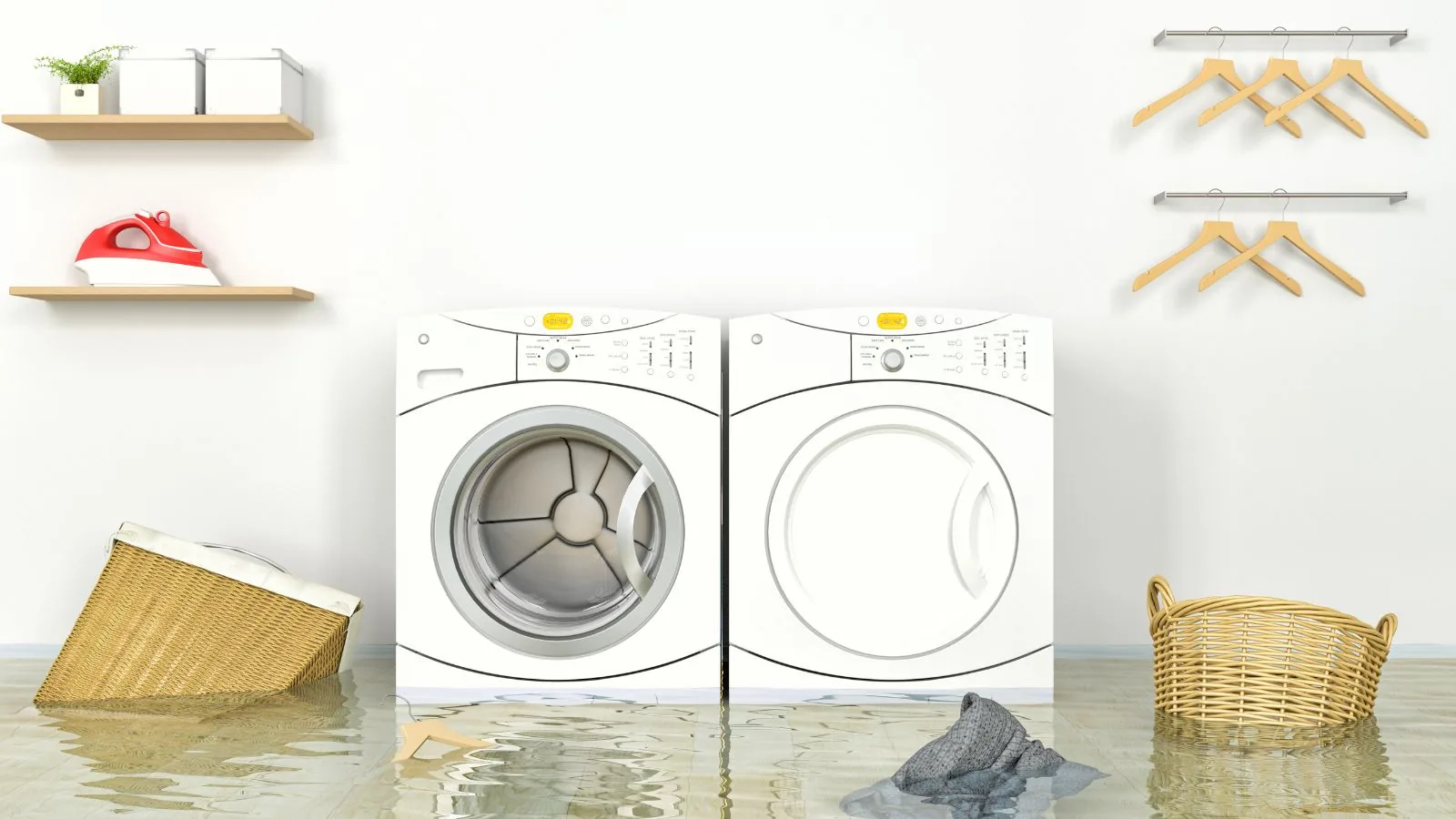
Appliance leak water damage in Seaford, NY is the wetting of floors, cabinets and walls by water from a dishwasher, washing machine, refrigerator or ice maker supply or drain. The dispatch line is open 24/7. These leaks are often small at first and large by morning, because a supply hose under pressure keeps pushing water until someone closes a valve.
Find the shutoff behind or beside the machine, usually a small valve on a copper or braided line, and turn it clockwise. Pull the appliance forward only if the floor under your feet is dry.
An appliance is flooding the floor right now
Speed matters because water from a supply line is clean at first and then picks up dirt, soap and floor finish chemicals as it spreads. Drain-side overflows from a washer or dishwasher start dirtier, closer to Category 2 under ANSI/IICRC S500.
- Close the shutoff valve at the wall. If you cannot find it, close the main water valve for the house.
- Stop the appliance at its control panel, then unplug it only if the outlet and floor are dry.
- Mop or towel the shallow water toward a floor drain or the door. Do not run a household vacuum on wet floors.
- Photograph the model plate, the hose or fitting that failed, and the wet cabinets.
- Call the dispatch line, nights and weekends included.
Electrical and slip hazards around a wet appliance
A kitchen or laundry room packs outlets, cords and a 240 volt circuit near the water. A dryer or range sharing a wall with the leak raises the stakes.
Safety before the call
If water reaches an outlet, cord, power strip or panel, stay out. Switch off the breaker only if the panel is dry and reachable without wading. Do not touch a wet appliance that is still plugged in.
Call the utility or 911 for sparks, a burning smell or a gas odor before you call the restoration line. A washer in a basement may sit near the panel, so check where the water is heading.
Hose burst or machine overflowed? Call the dispatch line and describe what is wet. We will tell you what to move and what to leave.
Call (516) 845-9582Where each appliance leak starts
Each appliance fails differently, and the failure tells us how far the water went and how clean it was.
Washing machine
Rubber hoses crack at the crimp and a clogged drain standpipe overflows. A burst hose delivers around a dozen gallons a minute, which is why laundry leaks reach the next room fast.
Dishwasher
Door gaskets, the inlet valve and the drain hose are the usual sources. The water runs under the cabinet toe-kick, so the wet area is bigger than the visible puddle.
Refrigerator and ice maker
A quarter-inch plastic supply line to the ice maker can split inside the wall or behind the unit and drip for weeks. These slow leaks buckle flooring before anyone sees water.
How we find and dry the damage
A moisture meter walks the floor, the cabinet bases and the wall bottoms, and a thermal imaging camera shows cooler wet zones under flooring. Pumps or a wet vacuum extraction unit take the standing water, and a floor mat extraction tool pulls water from carpet and pad without lifting the room.
Air movers dry the surfaces and LGR dehumidifiers hold the room's humidity down. Dishwasher toe-kicks and the base of cabinets are often removed to dry the cavity behind them. Readings go in a log each visit so you can see the numbers fall.
| Source | Water type | What typically needs attention |
|---|---|---|
| Washer supply hose | Category 1 at first | Floor, nearby walls, and the room below if upper floor. See water extraction |
| Washer or dishwasher drain overflow | Category 2 likely | Carpet and pad often replaced, hard floors cleaned and dried |
| Ice maker or fridge line | Category 1, long exposure | Subfloor, hardwood edges, cabinet bases. See hardwood floor repair |
| Dishwasher inlet or door | Category 1 or 2 | Toe-kick, cabinet base, floor under the unit |
Dry in place or tear out: honest trade-offs
Hard surfaces and solid wood cabinets often dry in place when caught within a day. Particleboard cabinet bases swell and rarely return to shape. Carpet pad soaked by Category 2 water is usually replaced, while the carpet itself may be saved if it is cleaned and dried.
Laminate and engineered flooring behave worst, since the core swells at the seams. If your appliance leak reached a finished floor, see kitchen water damage restoration for how cabinets and flooring are handled together.
What sets the price after an appliance leak
Cost follows the water category, the number of square feet affected, and whether materials can be saved or must come out. Cabinet and flooring replacement drive the rebuild side far more than the drying itself.
Drying days, equipment count and whether a second room or the floor below got wet also move the number. Scope and price are explained before work starts, and a call gives a real figure for your kitchen or laundry room.
A general note on insurance
Sudden failures such as a burst hose are often covered by homeowners and renters policies, while long-term seepage from a worn seal often is not. Read the water damage section of your policy, check the deductible, and ask your insurer what it needs.
NY DFS recommends photographing damage before cleanup and holding off on permanent repairs until the insurer has had a chance to inspect. Keep the failed hose or valve. We cannot promise any claim result.
What we do not do
We do not repair or replace appliances, rebuild supply plumbing, or service gas dryers and ranges. An appliance tech or plumber handles that, and a failed part should be fixed before drying starts.
A new hose braided with stainless steel and a drain pan under the machine cost little next to a flooded floor, but those are suggestions, not services we perform.
Owners, renters and the shared wall
Seaford's 92.9% owner-occupied rate, from the Census, means most appliance leaks are the owner's to fix. Renters, who pay a median gross rent of $2,489 according to Census data, should tell the landlord in writing the same day. The NY Attorney General's tenant guide notes that a landlord may enter for an emergency leak without advance notice.
Check burst pipe water damage if the line failed inside a wall. Our service area page lists nearby towns we serve.
Frequently asked questions
Do you handle appliance leak emergencies at night or on weekends in Seaford?
Yes. The dispatch line is open 24/7. Close the supply valve first, keep out of water near outlets, and call. We do not promise an arrival time, but we will walk you through what to protect.
My dishwasher leaked a little. Do I need a pro?
If the water stayed on a tile floor and you dried it fully, probably not. If it ran under the toe-kick or cabinet, moisture can stay trapped for days. A moisture meter reading tells you whether the cabinet base and subfloor are really dry.
How do I know if the fridge ice maker line has been leaking?
Look for cupped or soft flooring near the refrigerator, a musty smell, or a damp spot behind it. The plastic line can seep for weeks. A thermal imaging camera and a pin-type moisture meter can map the wet area without opening the floor.
Is washing machine overflow water safe to touch?
Treat it with care. Drain overflow carries detergent, lint and soil, and it can count as Category 2 under the S500 standard. Wear gloves, keep children and pets out, and let a crew decide what can be dried and what should go.
Will a leak upstairs damage the ceiling below?
It can. Water finds seams and light fixtures, and a stain may show up hours later. If the ceiling sags or drips, keep clear and see ceiling water damage repair for how that is handled.
How long until my kitchen or laundry room is dry?
Many appliance jobs run 3 to 5 days of drying. Hard floors and tile finish sooner, while cabinet bases and subfloor take longer. We read the meters at each visit and tell you what the numbers say before equipment comes out.
Late night or Sunday, the line takes the same call. Scope and price are explained before any drying equipment is placed.
Call (516) 845-9582