
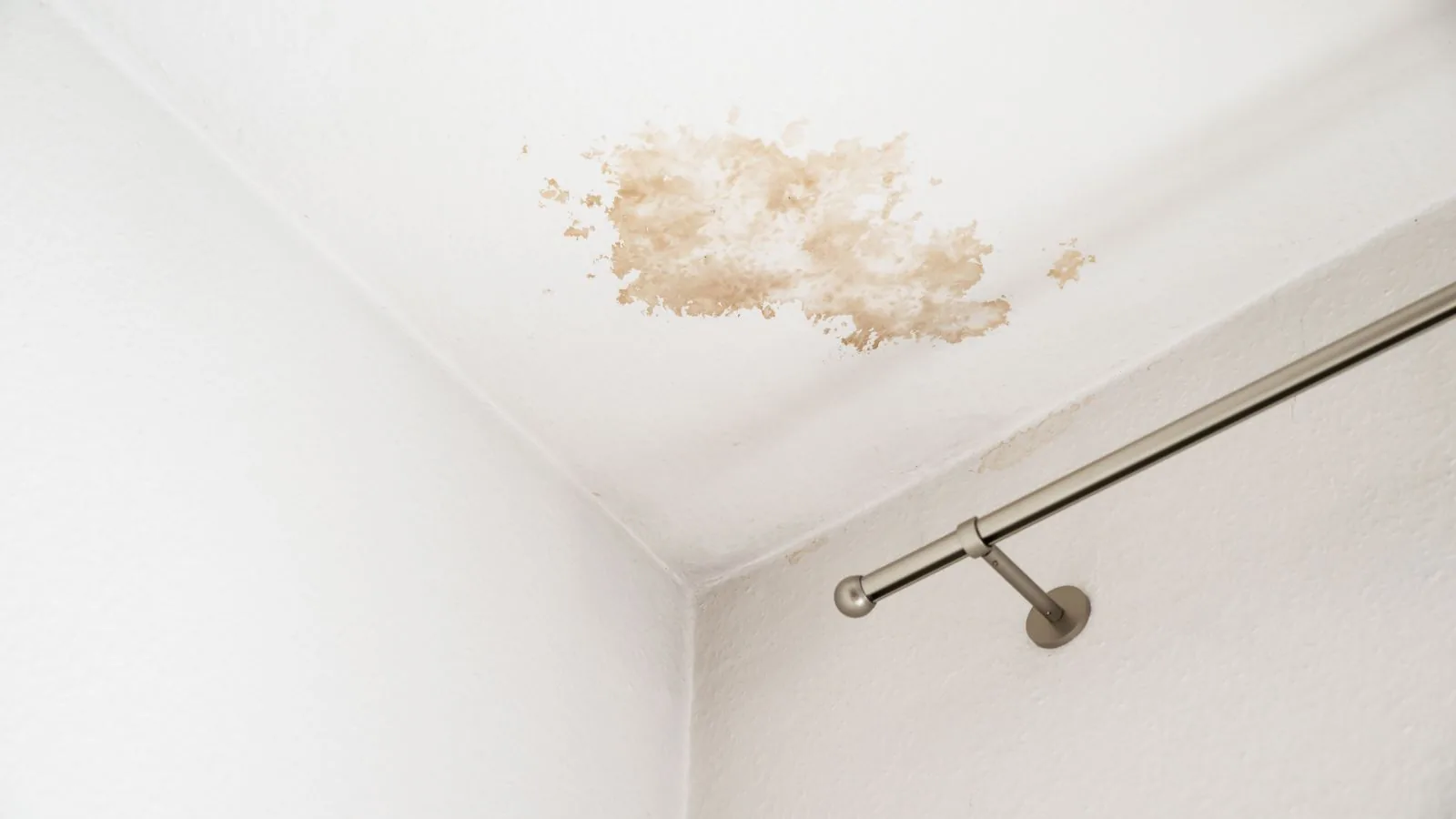
Ceiling water damage repair in Seaford, NY means dealing with a finished ceiling that has absorbed water and with the framing, insulation and wiring above it. A brown stain is only the visible edge, because water usually pools in the cavity first. The dispatch line is open 24/7.
Stay out from under a bulging or sagging ceiling. Place a bucket under any drip and move furniture aside. If light fixtures or fans are wet, leave the switch off and do not touch them.
A sagging ceiling is an emergency, not a cosmetic problem
A ceiling that bulges is holding water, and wet drywall is heavy. It can let go suddenly and drop water, insulation and plaster. If it is dripping, bulging or darkening quickly, treat it as urgent.
- Move people and pets out from under the area.
- Pierce a bulge only if a restoration crew tells you how. Uncontrolled release can soak the room.
- Place buckets and plastic sheeting under drips. Photograph the stain, its edges and the time.
- Turn off power to that circuit only from a dry panel. If lights flicker or you smell burning, call the utility or 911 first.
- Call the dispatch line and describe what is in the room above.
What a ceiling stain really tells you
The color and shape of a stain point to its age. Fresh water gives a damp, darker patch with soft edges. Old, repeated wetting leaves rings and tan or brown bands, which means the problem has been returning.
Where the stain sits tells you where to look above it. Under a bathroom, suspect a supply, drain or tub seal. Near an exterior wall or top floor, suspect the roof or flashing. In a central area under a hallway, suspect a pipe or an HVAC line.
Ceiling stained, bulging or dripping? Move people and belongings out from under it, then call the dispatch line.
Call (516) 845-9582Roof leaks and ceiling damage in Seaford
A roof leak is one of the most common reasons a ceiling stains. Water enters at a flashing, vent boot, damaged shingle or valley, then runs along a rafter or the underlayment and appears many feet from the entry point. The stain can be on the opposite side of the room from the actual hole.
Heavy rain tests a roof harder than normal weather. The National Weather Service warning for southeastern Nassau on August 18 and 19, 2024 cited rainfall rates of 1 to 3 inches per hour. After a storm like that, walk through the top floor with a flashlight and check ceilings, closets and attic hatches for new stains.
A restoration crew can contain the water indoors, open the ceiling, and dry the cavity with a moisture meter and thermal imaging camera. The crew does not repair shingles or flashing. A roofer must close the hole, and you should call one while the ceiling is being dried. Tarping a leak early limits the next round of wetting. If rain came through the roof along with wind damage, see storm water damage cleanup.
Other sources: pipes, appliances and HVAC
Not every ceiling stain comes from above the roofline. A bathroom or laundry on the floor above can drip from a supply line, a drain or a worn seal. Supply failures follow the pattern on the burst pipe water damage page, while slow seepage looks more like a recurring ring.
Air handlers in an attic can also overflow a condensate pan. A water heater leak on an upper level will soak the floor below. Finding the source is the first job, because drying a ceiling without stopping the source only buys a few days.
How a wet ceiling is assessed and dried
The crew starts with a moisture meter and a thermal imaging camera to see how far the water spread. Standing water in the cavity is released through a controlled hole, and wet insulation is removed because it holds water against the drywall.
Drywall that is soft, sagging or stained through is cut back to dry framing. Air movers and LGR dehumidifiers dry the joist bay for several days, and daily readings confirm progress. For the process, see structural drying and dehumidification.
Dry in place or replace the ceiling
Painting over a stain before the cavity is dry hides the problem, and the stain often returns.
| Condition | Usual approach | Trade-off |
|---|---|---|
| Small stain, firm drywall, caught early | Dry through small access holes, stain-block and repaint | Lowest cost, needs exact moisture readings |
| Bulging or soft drywall | Cut out the wet section and replace | Safer, patch must be taped and finished |
| Insulation soaked | Remove and replace insulation | Adds cost, prevents trapped moisture |
| Textured or popcorn ceiling | Test and match texture, special care for older materials | Match can be hard |
| Repeated stains at same spot | Open and trace the source, repair then restore | More upfront work, stops recurrence |
What sets the price of ceiling repair
Cost depends on the water category, how many ceiling sections are affected, the ceiling type, insulation involved and the number of drying days. Access matters, since a second-floor ceiling or high vault needs more labor.
The rebuild, including drywall, taping, texture and paint, is a separate scope from drying. Scope and price are explained before work starts, and a call gives you a real number once the crew sees the damage.
How insurance usually views ceiling and roof leaks
Sudden and accidental water, such as a pipe that failed or a storm that opened the roof, is often covered. A slow leak from an old roof or a long-neglected seal often is not. Check your policy for how it treats roof and plumbing causes.
New York's Department of Financial Services advises photographing damage before cleanup and filing as soon as possible. Keep the damaged materials if the insurer asks and save roofer and plumber invoices. Approval is up to the insurer.
What this service does not include
Restoration is not roofing or plumbing. We dry and prepare the ceiling, and licensed roofers and plumbers fix the source. We also do not diagnose health effects of any mold found. Questions about health belong to a physician, and mold work is covered on the mold remediation page.
For roof replacement or large structural repairs, ask the Town of Hempstead Department of Buildings about permits. See the service area page for where crews work.
Frequently asked questions
Do you handle ceiling water damage emergencies at night or on weekends in Seaford?
Yes. The dispatch line takes calls at any hour. Move people out from under the ceiling, place a bucket and call. Tell the dispatcher what is in the room above, such as a bathroom, attic or roof.
Should I poke a hole in a bulging ceiling?
Only if told how. A controlled hole at the lowest point releases trapped water into a bucket, but a poke in the wrong spot can bring down a wide section. Keep clear and let a crew relieve it safely.
How do I tell a roof leak from a plumbing leak?
Stains that appear after rain suggest the roof. Stains that appear with no rain, or under a bathroom, suggest plumbing. A moisture meter and thermal imaging camera help trace the path, but a roofer or plumber confirms the source.
Can I just paint over the stain?
Not until the cavity is dry. Paint over a wet ceiling traps moisture and the stain tends to reappear. Stain-blocking primer is applied only after the moisture meter shows the framing and drywall are dry.
What happens to the insulation above the ceiling?
Wet fiberglass insulation holds water against the drywall and framing and usually has to be removed and replaced. Dense materials may dry. The crew checks with a moisture meter and removes what will not reach a dry standard.
How long does ceiling drying take?
Drying usually takes several days after wet material is removed, depending on how much water got in and the humidity. Repairs and painting follow once readings show the cavity is dry. The crew explains the timeline after the first assessment.
Water above a ceiling keeps working while you wait. Call now and a crew will explain scope and price before opening anything.
Call (516) 845-9582