
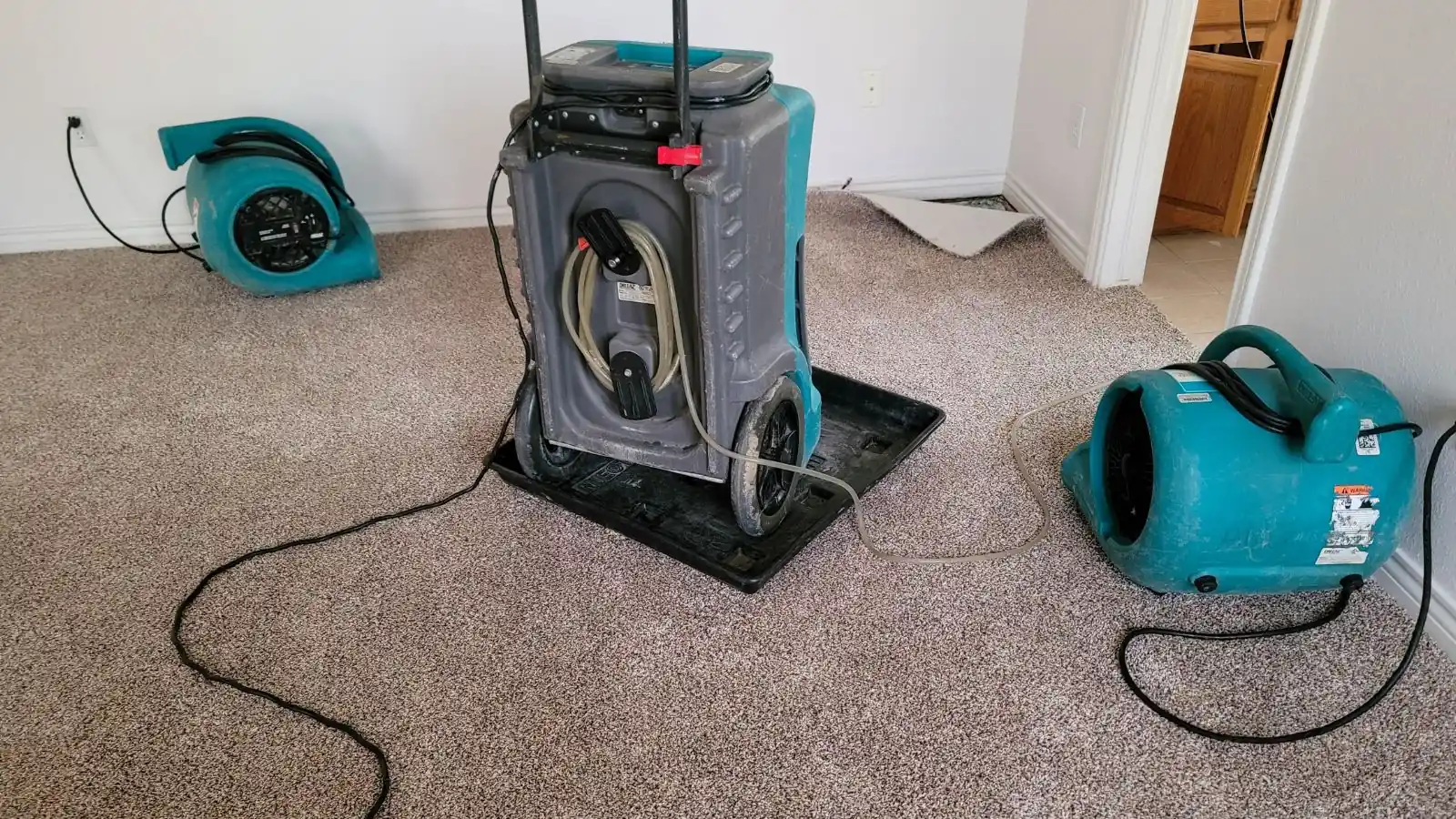
Structural drying is the controlled removal of moisture from building materials using air movers, dehumidifiers and measurement. In Seaford, NY it is what separates a house that is truly dry from one that only looks dry. Surface wiping does not reach the water held inside studs, subfloor and the back of drywall.
The process runs for days, not hours, and it is guided by readings taken on the first visit and on each return. The goal is a set of numbers that match unaffected material in the same house.
Why does the room still feel damp and smell musty after the leak was fixed?
A leak can be repaired and the building can still be wet. Water soaks into drywall, wood and insulation, and it leaves slowly, especially in a closed room with no airflow.
A musty smell, baseboards that stay cool to the touch and paint that keeps bubbling are signs that moisture is still inside the assembly. That is the problem structural drying solves, and it starts with finding the water, not guessing.
Water mitigation: the stage that comes before drying
Water mitigation is the work that limits damage in the first hours: stopping the source, removing standing water, and pulling out materials that cannot be dried. Drying cannot start properly until the free water is gone, because dehumidifiers work on moisture in the air, not puddles.
Mitigation also decides how big the drying job becomes. Pump-out with extraction units, lifting soaked pad and cutting back wet drywall give air a path into the cavity. For standing water, see water extraction, which covers the pump-out stage in detail.
If a room still feels damp days after the leak was fixed, call and describe it. A moisture reading is the only way to know what is left inside the wall.
Call (516) 845-9582Moisture mapping: how crews find the wet material
Moisture mapping is a room-by-room record of where the building is wet and how wet it is. A pinless moisture meter scans surfaces, a pin meter confirms depth in wood, and a thermal imaging camera shows cool, damp areas behind finishes.
The readings go on a sketch of the floor plan with dates. Each return visit repeats the same points so you can see numbers falling, rather than hearing that things are "coming along."
- Baseline readings are taken in dry rooms of the same house to set a target
- Wet points are marked and checked again every day or two
- Thermal images are used to find, not to prove, dryness
- Hidden spots such as wall bases, under cabinets and ceiling cavities get their own readings
The equipment and what each piece does
Air movers
High-velocity fans that push air across wet surfaces and into cavities, lifting moisture off materials.
LGR dehumidifiers
Low grain refrigerant units that pull water vapor out of the air so the materials keep releasing moisture.
Desiccant dehumidifiers
Used in cold or very wet spaces where refrigerant units lose output.
Injection drying systems
Hoses and small drilled ports that move warm air into closed wall cavities and under cabinet bases.
Thermo-hygrometers
Record temperature and humidity so crews can track the drying conditions in each room.
How long drying takes and what changes it
Most residential jobs run three to five days of equipment time, and dense or layered materials run longer. The ANSI/IICRC S500 standard describes the principles of drying and the reading of conditions, and it is worth asking any company whether its crews follow it.
Seaford's long-term annual precipitation normal is about 46 inches, measured at the nearest long-record NOAA station, Islip MacArthur Airport in Suffolk County. Humid summers slow drying, so expect dehumidifier time to run longer in July than in January, and keep windows closed while equipment runs.
| Factor | Faster drying | Slower drying |
|---|---|---|
| Material | Drywall, carpet | Plaster, hardwood, concrete |
| Air movement | Open rooms, ports in cavities | Closed cabinets, sealed walls |
| Humidity | Dry outside air, tuned dehumidifiers | Humid summer days |
| Water category | Clean supply line water | Contaminated water needs removal first |
| Time to start | Hours after the leak | Days of sitting water |
Dry enough: how the job gets signed off
Equipment stays until the wet materials read within a few points of the dry reference taken at the start. Pulling it early leaves moisture inside, and that is where odor and swelling come back.
The final visit records readings on every mapped point. If a spot is stuck high, crews open it up and look, instead of leaving it behind a coat of paint.
What sets the price of structural drying
The main factors are the water category (clean, gray or black water), the size of the affected area and the number of rooms. Then come the materials, the count of air movers and dehumidifiers running, and the number of drying days.
Rebuild scope is quoted separately. Scope and price are explained before work starts, and a call to the dispatch line gets you a real number for your house.
Insurance and drying costs: general notes
Sudden and accidental water damage is often covered, and gradual leaks and neglect often are not. Read your policy or ask your insurer, and keep the drying log, since it documents what was wet and when.
Flood is usually excluded from a typical homeowners policy and needs separate flood coverage, according to New York DFS. We cannot promise approval or a payout.
What we do not do
Drying does not fix the cause. A broken fitting, a roof leak or a failing sump needs a plumber or roofer. We also do not rebuild finished walls unless scope is agreed in writing.
Related sources are covered on their own pages: wall and drywall water damage repair for cutting back wet walls and hardwood floor water damage repair for cupped boards.
A note for Seaford homes
The Census QuickFacts owner-occupied rate for Seaford is 92.9 percent. That means most readers can authorize drying and rebuild decisions directly, so ask for the readings log before you agree to extra days.
If a flood event brought the water, read about flood damage restoration first. Our service area page lists nearby towns.
Frequently asked questions
Why does my house still smell damp after the leak was fixed?
Water usually stays inside drywall, insulation and framing long after a leak stops. A musty smell means moisture is still present in the assembly. A moisture meter and a thermal imaging camera find where, and dehumidifiers and air movers remove it. Ventilating with a window does not reach inside a wall.
How do I know the drying is finished?
Moisture mapping gives you numbers. Crews record readings at set points and compare them with a dry reference from unaffected material in the same house. Equipment comes out when the wet points fall into that range, not when the room feels dry to the hand.
Can I just run a dehumidifier from the hardware store?
A small unit helps with humidity but moves little air through wet cavities and cannot reach the water in framing or subfloor. Professional LGR units and air movers are sized to the room and used with measured readings. If the area is small and the water was clean, a home unit plus airflow may be enough.
How many days will equipment stay in my house?
Many residential jobs run three to five days, and thicker materials such as plaster or hardwood run longer. The answer comes from daily readings, not a fixed schedule. The plan and the expected days are explained before work starts.
Will the equipment be loud and will my electric bill change?
Air movers and dehumidifiers run all day and night, so there is noise and a power draw. Ask how many units will run and for how many days. Crews can often position units to keep bedrooms quieter, and the count is part of the price discussion.
Do you do structural drying on the same day as the call?
Availability is confirmed when you call. Call the dispatch line, describe the water and the rooms, and a crew can advise on the first steps. Drying starts with a visit and readings, and the scope is explained before the equipment goes in.
Call to have your drying plan explained and priced before any equipment goes in. Availability is confirmed when you call.
Call (516) 845-9582