
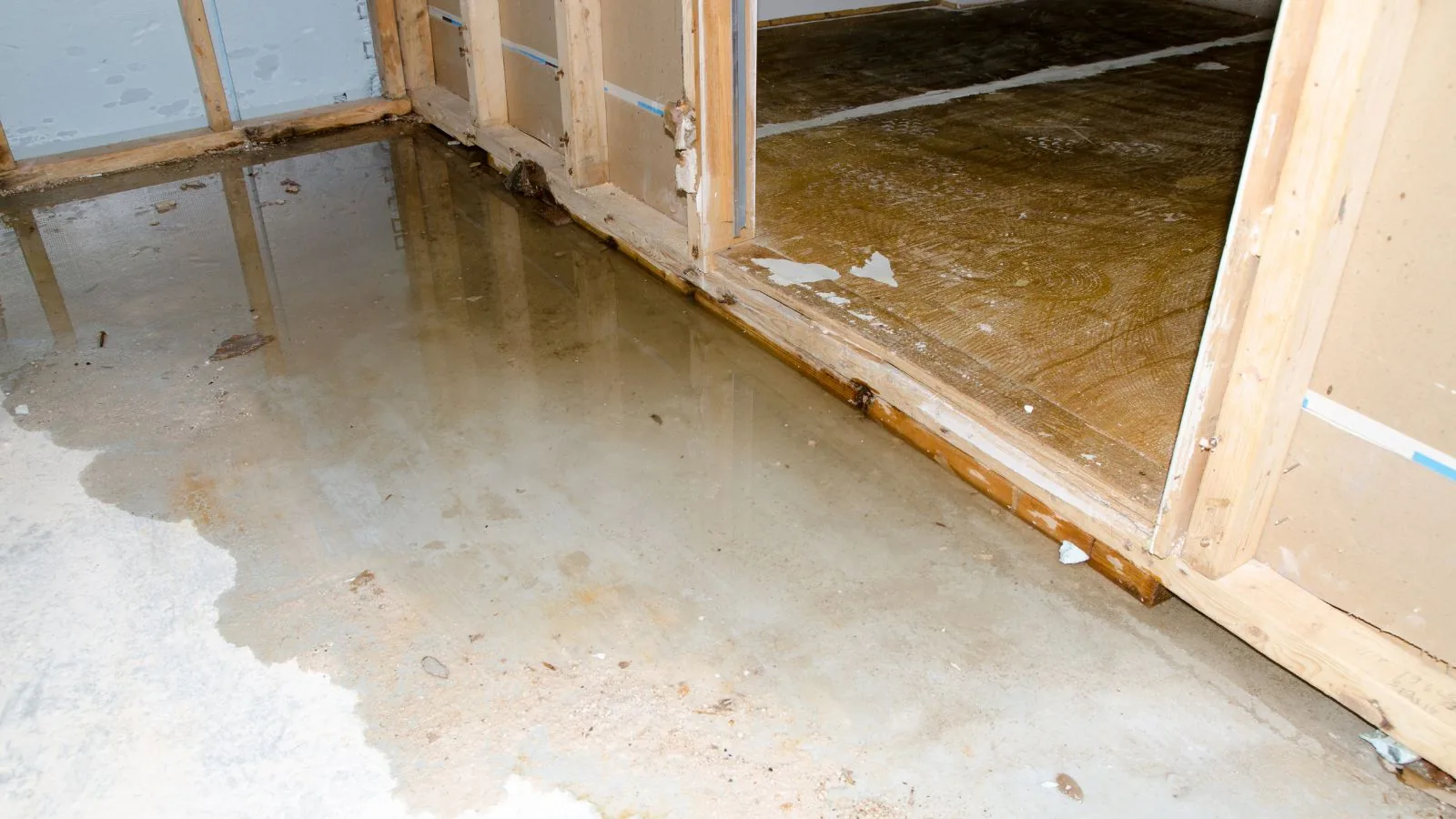
A sewage backup is wastewater from a drain or sewer line that flows back into your home through a floor drain, toilet, tub or sink. If it is happening in Seaford, NY, treat it as an urgent job for trained crews, not a mop and bucket. Our dispatch line is open 24/7, and a call is the right next step once you are safe.
While you wait, keep children and pets out of the room, stop using every drain in the house, and do not run the washing machine or dishwasher. Every flush or rinse sends more water toward the same blocked line.
Why is my floor drain gurgling and brown water coming up in the basement?
Gurgling in a drain, a toilet that bubbles when the washer drains, or a dark film around a floor drain all point to a line that cannot carry the flow away. The water has nowhere to go but back up the lowest opening in the house.
That is a sewage backup, and the cleanup is a different job from drying out a clean-water leak. The water is classed as Category 3 under the ANSI/IICRC S500 standard, which means porous materials it touched are usually removed instead of dried.
When a sewage backup is an emergency: safety first
Before anything else, decide whether the room is safe to enter. Standing water that reaches outlets, appliances, a furnace or an electric panel is an electrical risk on top of the contamination.
Safety steps before you call
If water is near the electric panel, outlets or a plugged-in appliance, stay out. Cut power at the main breaker only if the panel is dry and you can reach it without stepping through water.
Smell gas or see sparks? Leave the house and call 911 and your utility before you call the restoration line. Do not wade into sewage in bare feet, and keep everyone out of the wet zone until crews arrive.
Dirty water is still coming up and you are not sure what to touch? Call the dispatch line and describe what you see before you start cleaning anything.
Call (516) 845-9582The first hour: what to do and what to skip
- Stop using water. No flushing, no showers, no laundry, no dishwasher.
- Keep people and pets out of the affected rooms, and close doors to limit spread through the house.
- Photograph the water line, the damaged items and the drain before anything is moved.
- Do not use a household vacuum or a wet-dry vacuum on the water. Do not try to dry carpet with fans, because they push contaminated air and droplets around.
- Call the 24/7 dispatch line to ask about availability, then call your plumber about the blockage itself.
Questions about your own health after contact with sewage belong with a physician. We handle the building, not medical advice.
Whose line is blocked: your pipe or the county sewer?
Nassau County Department of Public Works is the sewer authority for Seaford. That matters because a clog can sit in the pipe that serves only your house or in the larger public line that serves the street.
A plumber with a drain camera can tell you which one it is, and the county sewer authority is who you contact if the problem is in the public main. Tell the plumber and your insurer what you were told, because it affects who pays for the repair of the line and who does not.
How sewage cleanup is done
Crews start by pumping out standing water with extraction units and removing grossly contaminated debris. Carpet, carpet pad, insulation and drywall that wicked up the water are cut out and bagged, since porous materials cannot be made reliably clean.
Hard surfaces such as concrete, tile and framing are scrubbed and treated with a cleaner and antimicrobial applied to the surface. Then comes drying with air movers and LGR dehumidifiers, and HEPA air scrubbers run to clean the air while demolition and cleaning are underway.
Containment
Plastic sheeting and negative air keep dust and droplets out of clean rooms. Foot traffic is limited to one path so contamination does not spread.
Moisture checks
A moisture meter and a thermal imaging camera show how far the water travelled into wall bases and subfloor. Readings are repeated until the framing matches a dry reference.
What can be saved and what goes
Material type decides the outcome far more than how long the water sat. This table shows how crews usually treat common items.
| Material | Usual outcome | Why |
|---|---|---|
| Carpet and pad | Removed | Porous, holds contamination deep in the fibers |
| Drywall and insulation | Removed above the wet line | Wicks water upward, cannot be cleaned |
| Concrete floor | Cleaned and treated | Hard and sealed enough to scrub |
| Solid framing | Cleaned, treated and dried | Dense wood can be cleaned and dried to target |
| Upholstery and mattresses | Usually discarded | Fabric and foam absorb and hold water |
| Hard plastic and glazed items | Cleaned | Non-porous surfaces wash well |
What sets the price of a sewage cleanup
Price follows the water category, which here is always 3, and the size of the affected area. The next factors are the materials involved, since removing carpet and drywall costs more than cleaning concrete, and the number of drying days with the equipment on site.
Rebuild scope is separate. Replacing flooring, drywall and trim after demolition is its own estimate. Scope and price are explained before work starts, and a call to the dispatch line gets you a real number for your house.
Insurance and sewage backup: check your policy
Sewage backup is often excluded from a standard homeowners policy and covered, if at all, by a water back-up or sewer backup endorsement. New York DFS says a typical homeowners or renters policy does not cover flood, and backup coverage is a separate question.
Read your policy or ask your insurer which endorsements you carry. File as soon as possible, photograph the damage before cleanup, and do not make permanent repairs until the insurer has had a chance to inspect.
What we do not do
Restoration crews clean and dry the building. We do not repair or replace sewer pipes, clear the blockage or run drain cameras. That is a plumber's work, and you should call one the same day so the backup does not repeat.
We also cannot give medical guidance, and we do not decide who pays for the line. For questions about the public sewer, ask the county. For a related spill in the lowest level, see our basement water damage cleanup page.
Seaford homeowners: flood and backup are different problems
Nassau County's hazard mitigation plan rates flooding and coastal hazards as highly likely, with Seaford among the places it maps for flood risk. If heavy rain or a tidal surge pushes water into the sewer system, the backup may arrive with floodwater too.
Check the FEMA flood map for your address, and ask your insurer whether you carry flood coverage as well as sewer backup. If rising water is the cause, read about flood damage restoration or see the service area page for the towns we cover.
Frequently asked questions
Why is my floor drain gurgling and bringing up dirty water?
Gurgling means air is being pushed through a drain that cannot clear. Dirty water at the floor drain means the line downstream is blocked or overloaded. Stop using water in the house, keep people out of the area and call the dispatch line. A plumber should find the cause, and a restoration crew should clean up whatever came into the house.
Do you handle sewage backup emergencies at night or on weekends in Seaford?
Yes. Dispatch is open 24/7 by phone. Call after you have checked that the room is safe from electrical hazards. A night or weekend call is handled the same way as any other call.
Can I clean up a small sewage backup myself?
Small spills on a hard floor can sometimes be handled by a homeowner who wears protective gloves, boots and a mask and disposes of cleaning materials properly. Anything that soaked carpet, drywall or insulation is better handled by a crew. Questions about health risks should go to your physician.
Does homeowners insurance cover a sewer backup?
Often not without an added endorsement. Many policies exclude backup of sewers and drains unless you bought a water back-up endorsement. Check your policy, ask your insurer, and photograph everything before cleanup starts. We cannot promise coverage or approval.
How long does sewage cleanup take?
Extraction and removal of damaged materials often take a day. Drying then runs several days, depending on how much wet material is left and how humid the house is. Rebuilding is a separate stage with its own schedule. We explain the scope and the timeline before work starts.
Who do I call if the blockage is in the street?
Nassau County Department of Public Works is the sewer authority for Seaford, so it is the right office for the public main. For your own line, call a plumber. If you are unsure which it is, a drain camera inspection by the plumber will tell you where the blockage sits.
Sewage on the floor is not a weekend project. Call now, day or night, and get a scope and a price explained before any work starts.
Call (516) 845-9582