
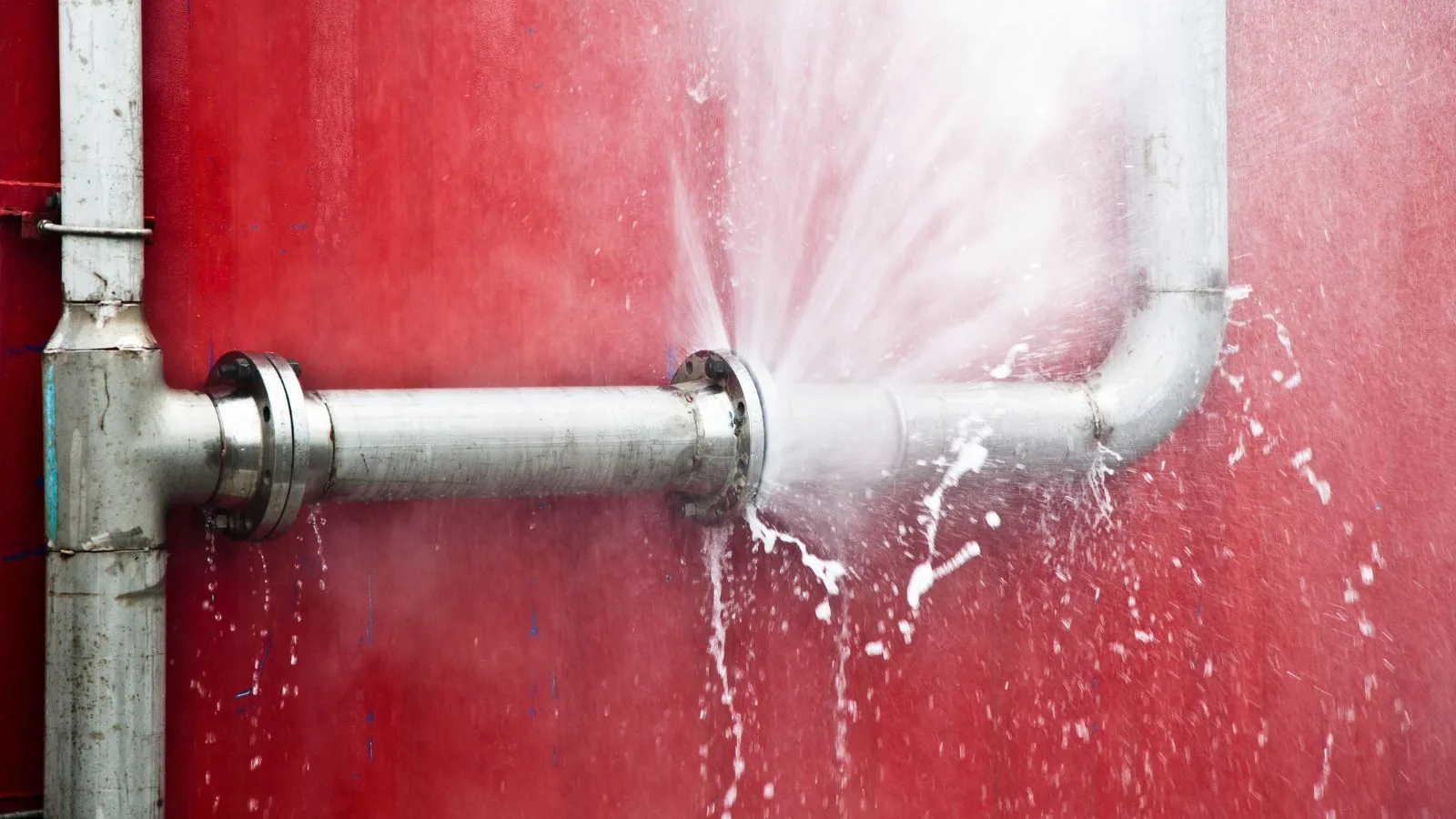
The main water shutoff in a Seaford, NY home is a valve on the pipe where the water service line enters the building, usually in the basement, a utility room, a crawl space or a garage wall near the water heater and meter. Turn it clockwise (or a quarter turn, if it has a lever) to stop all water to the house. Test it once a year so it works when a pipe bursts.
Liberty Utilities publishes service information for its Merrick system, which lists Seaford, so its customer service is the authority to ask about the curb stop and the meter in front of your home.
Where to look for the main shutoff
Follow the water line. Start at the water meter if you can find it, because the main valve is normally just before or after the meter on the house side. In a house with a basement, look on the front wall nearest the street. In a slab home, check a utility closet, the garage or beside the water heater.
Look for a round wheel handle or a straight lever on a pipe that is about three-quarters of an inch to an inch across. If you cannot find it in ten minutes, trace the cold supply line backward from the water heater. Once you have located the valve, tag it with a bright label and photograph it.
The two valve types and their usual problems
| Valve type | How it works | Common problem | What to do |
|---|---|---|---|
| Ball valve (lever handle) | A quarter turn closes it. Handle across the pipe means closed. | Rarely sticks, can leak at the stem | Exercise yearly and call a plumber if it drips |
| Gate valve (round wheel) | Several turns clockwise to close | Seizes with age, wheel spins without closing, stem leaks | Do not force it. Plumbers often replace it |
| Curb stop at the street | Utility-owned valve in a buried box | Needs a special key, belongs to the utility | Ask your water utility |
Water stopped but the floor and walls are soaked? Call the dispatch line and describe where it spread.
Call (516) 845-9582Step by step: finding, closing and testing the main
- Locate the valve and clear anything stored in front of it so you can reach it quickly.
- Open a faucet at the lowest point in the house, such as a basement sink or a hose bib, so you can see flow.
- Turn the main clockwise slowly until it stops. Do not use a pipe wrench or a cheater bar on a stiff handle.
- Watch the open faucet. The flow should dwindle to a trickle and stop within a minute. If it keeps running at full volume, the valve is not sealing.
- Open a second faucet upstairs to drain the pipes and reduce pressure, then close both.
- Reopen the valve slowly, a half turn at a time, and check for drips at the valve stem and the meter connections.
- Mark the open and closed positions, and tell everyone in the household where it is.
Using the meter to test for hidden leaks
The water meter doubles as a leak detector. Turn off every fixture, including the ice maker and irrigation, and look at the meter's low-flow indicator, which is often a small triangle or dial. If it moves while nothing is running, water is leaking somewhere after the meter.
Close the main and check the meter again. If the indicator still moves, the leak is on the utility side of your valve. If it stops, the leak is in your house. Unexplained movement on a slab home can point to a line under the concrete, which is explained under slab leak water damage.
Curb stop caution: leave it to the utility
Many properties have a second valve near the street or property line, called the curb stop, inside a small box with a lid in the ground. It controls water to the whole property and usually belongs to the water utility, not to you. Opening or closing it with a homemade tool can damage the valve or the service line.
Ask your water utility whether you are permitted to operate the curb stop, how to request a shutoff and what to do after hours. Keep that number with your shutoff tag. If your main will not close, the curb stop may be the only way to stop water, so know the process before you need it.
When to close it and what else to do
Close the main for a burst or split pipe, a supply hose that has failed, a water heater leak you cannot stop at the tank, or any time you are leaving for several days in winter. For a single fixture, use its own shutoff first, such as the stop valve under a sink, the toilet's supply valve or the hot and cold valves on the washing machine.
For a failing tank, close the cold water inlet on top of the heater and turn off its power or gas supply. See water heater leak cleanup for the next steps. For a split pipe, burst pipe water damage explains what happens as water spreads, and frozen pipe water damage covers thaw failures.
Safety before you touch anything
If water is running near the electrical panel, outlets or an appliance plug, do not step into it. Cut power at the panel only if the panel is dry and safe to reach. If that is not possible, call the electric utility or 911 before you call a restoration line.
Closing the water main does not stop sewage coming up a drain. Sewage backups are a sewer problem, not a supply problem, and they carry contamination risks covered under sewage backup cleanup. Keep out of that water and keep children and pets away.
What shutting the main does not do
Closing the main stops new water but does not remove water already inside the house. Wet carpet, drywall and subfloors keep absorbing for hours, and water can travel along framing to other rooms. Standing water needs extraction, and wet materials need drying with air movers and dehumidifiers, as covered under water extraction.
A restoration crew does not repair the failed pipe or replace the valve. That is plumbing work. Our service area page lists where we dispatch, and a plumber is the next call for the repair itself.
What Seaford homeowners should check locally
Liberty Utilities, formerly New York American Water, lists Seaford and North Seaford among the communities served by its Merrick system in its published water quality report. Check your water bill to confirm who serves your address, then call that utility and ask where your curb stop is, who may operate it and how to reach them after hours.
Seaford's local sewer authority is the Nassau County Department of Public Works, which is separate from your water supplier. If the problem is a drain backing up, shutting off the water will not help, so keep the sewer authority's contact details beside your shutoff tag.
Ask the Town of Hempstead Department of Buildings, along with your plumber, whether replacing a main shutoff or service line needs a permit.
Frequently asked questions
Which way do I turn the water main off?
A round wheel handle turns clockwise to close, so think righty tighty. A lever handle closes with a quarter turn until the handle sits across the pipe. If you are unsure, turn gently and watch an open faucet to confirm the flow stops.
What if my main shutoff valve is stuck?
Stop and do not force it with a wrench or cheater bar, because the stem can snap and make things worse. Spray a penetrating lubricant, wait, and try again with moderate force. If it still will not move, call a plumber to replace it and ask your water utility about the curb stop.
Can I turn off the curb stop myself?
Usually it is the utility's valve, so ask your water utility before touching it. It sits in a buried box and often needs a special key. Operating it yourself risks damaging the valve and the service line.
How often should I test the main shutoff?
Once a year, ideally in the fall before freezing weather. Close it, confirm the water stops at a low faucet, then reopen it slowly. Valves that sit untouched for years often seize, and a failed test is a cheap warning compared to a flooded basement.
Do I need to drain the pipes after closing the main?
For a short shutoff, no. Opening a low and a high faucet will relieve pressure and stop residual drips. For a long absence in winter, a plumber can drain the system and shut off the water heater to reduce freeze risk.
Who serves water to Seaford and who do I call about the curb stop?
Liberty Utilities lists Seaford and North Seaford in its Merrick system, but check your bill to confirm your address. Call the utility on that bill and ask where your curb stop is, whether you may operate it and who to reach after hours.
Once the main is closed, the next job is getting the water out. Call the 24/7 line and say what you shut off and when.
Call (516) 845-9582