
The best storm prep for a home in Seaford, NY is mostly boring work done early: clear the gutters, test the sump pump, check where the downspouts drain, learn your flood zone, and confirm what your insurance covers. None of it needs special skills, and most of it takes a weekend.
Nassau County's hazard mitigation plan rates flooding and coastal hazards as highly likely, meaning one or more events per year. That is the reason to prepare. This guide gives a checklist, explains why each step matters, and ends with what to do if water gets in anyway.
The checklist below draws on the New York State Department of Financial Services flood insurance guidance and the National Weather Service Freeport impact records, both linked in the sources your insurer and the weather service publish.
Start with where water goes
Most storm water damage starts with water that had nowhere to go. Clean gutters so roof runoff does not spill beside the foundation. Extend downspouts at least 4 to 6 feet away from the house, and check that the soil slopes away from the foundation walls rather than toward them.
Look at window wells and any below-grade doors. A cover on a window well and a working drain at a basement stair keep a heavy rain from running straight into the house. Clear leaves from the street storm drain in front of your house if it is safe, since a blocked drain sends water to the lowest yard.
Test the basement defenses
If you have a sump pump, pour a bucket of water into the pit and watch it start, discharge and shut off. Check the float for sticking and the discharge line for kinks or ice. A battery backup matters because storms often take out power at the same time the pump is needed most.
A water alarm, a small battery device that sounds when it touches water, costs little and gives you earlier warning than a smell. Raise stored items onto shelves or plastic bins at least 6 inches off the floor. For what happens when a basement does take water, see basement water damage cleanup.
Storm water already in the house? Call the 24/7 line now and describe what you see. Availability is confirmed when you call.
Call (516) 845-9582Walk the building envelope
Wind-driven rain gets in around windows, door frames, roof flashing and vent penetrations. Look for cracked caulk, loose shingles and gaps where a pipe or cable passes through a wall. Check the attic after the first hard rain for stained sheathing or damp insulation.
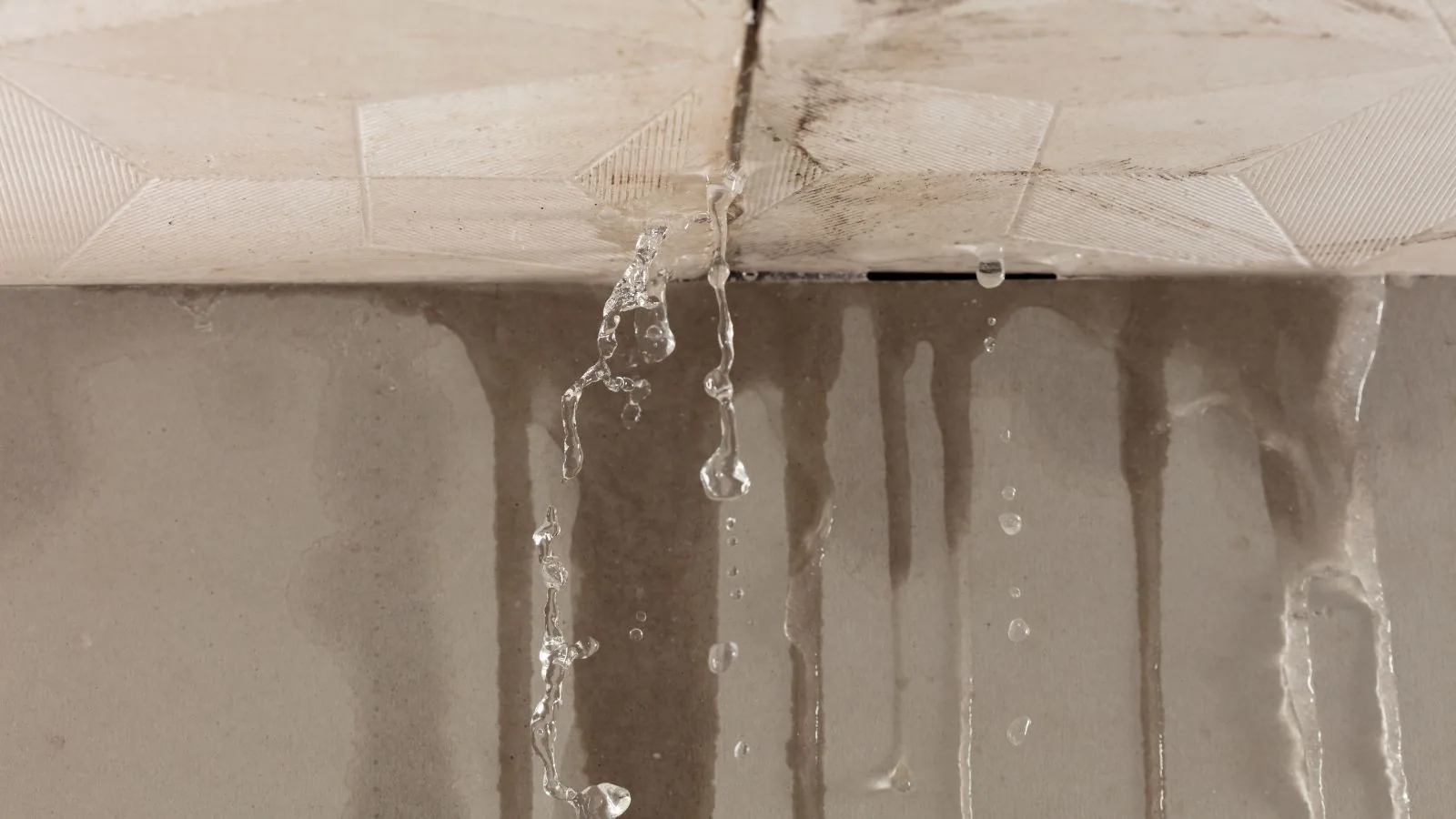
Roof and wall leaks are the territory of storm water damage cleanup once water is inside, and a leaking roof that stains the ceiling falls under ceiling water damage repair. A roofer fixes the roof. A restoration crew dries what got wet.
The prep checklist
- Clean gutters and extend downspouts away from the foundation.
- Test the sump pump and battery backup, and clear the discharge line.
- Locate and label the main water shutoff, the electrical panel and the gas shutoff.
- Raise stored items and appliances in the basement off the floor.
- Install a water alarm near the sump, the water heater and the washer.
- Check caulk, flashing and shingles for gaps.
- Photograph and video every room and keep a copy off-site or in the cloud.
- Look up your flood zone on the FEMA Flood Map Service Center.
- Read your insurance policy and ask your insurer about flood and water back-up coverage.
- Save the numbers for your utilities, the fire department and the 24/7 restoration line.
Check the FEMA flood map for your address
The FEMA Flood Map Service Center lets you enter an address and see its flood zone designation. Zones beginning with A or V are high-risk areas, and zone X is lower risk. We do not publish a zone for Seaford addresses here, because the zone depends on the exact street, so check the FEMA flood map for your address.
A zone letter does not guarantee safety or danger. Water also comes from intense rain that overwhelms drains, from sewer back-ups, and from storm surge that exceeds the mapped elevation. Treat the map as one input and keep your own records of past water.
Flood insurance questions to ask now
The New York Department of Financial Services says the typical homeowners or renter's policy does not cover flood damage. Coverage may come through a water back-up or sewage endorsement, or from a National Flood Insurance Program policy. Ask your insurer exactly what your policy includes and whether any waiting period applies to a new flood policy.
Do not wait for a forecast to ask. Sudden and accidental damage is often covered under a homeowners policy, while gradual leaks and neglect often are not. Check your policy, and file a claim as soon as possible after a loss. Document damage before cleanup, and hold off on permanent repairs until the insurer has inspected.
Which storm damage is which
| What happened | Typical source | First response |
|---|---|---|
| Water at the ceiling after wind and rain | Roof or flashing opening | Contain drips, photograph, call about drying |
| Water through a basement wall or floor | Groundwater or poor drainage | Stay out if the panel is wet, extraction and drying |
| Water rising in the yard and house | Surface or tidal flooding | Evacuate if told to, avoid electrical risk |
| Sewage in a floor drain or tub | Sewer back-up | Stop using water, keep out, specialist cleanup |
| Damp walls after a storm passes | Wind-driven rain at a window or door | Moisture readings and drying |
If water gets in anyway
Safety comes first. If water touches outlets, a panel or a sewage source, stay out, cut power only if the panel is dry and you can reach it safely, and call the utility or 911 for any electrical or gas risk before calling a restoration crew. Do not wade through standing water that might be energized.
Once it is safe, call the 24/7 line. Availability is confirmed when you call. Photograph everything, and move small belongings to dry ground. Flood water from outside is usually contaminated, so ask about flood damage restoration rather than treating it as a plain leak.
What Seaford homeowners should check locally
During Hurricane Irene on August 28, 2011, the National Weather Service Freeport impacts sheet records canal overflows in Seaford, with a peak storm tide of 8.9 feet MLLW. If your block is near a canal, treat a forecast surge as a real prompt to move belongings upstairs and shut off appliances low to the floor.
For Superstorm Sandy on October 29, 2012, the USGS reports record coastal flooding in the western bays of southern Nassau and tide levels that exceeded FEMA 100-year base flood elevations. A flood zone map is a baseline, not a ceiling, so ask your insurer about coverage even if you are outside the mapped zone.
The county's hazard mitigation plan lists Seaford with mapped V-zones, which is why checking your own address matters. For the towns near Seaford where crews work, see the service area page.
Frequently asked questions
When should I start storm prep?
Well before the forecast. Clear gutters, test the sump and read your policy in the calm months. Once a storm is days away, hardware stores run low on supplies and insurers may limit new coverage.
Is a sump pump enough protection?
It helps with groundwater but depends on power and a clear discharge line. Add a battery backup and a water alarm, and test the pump each season.
Does homeowners insurance cover flood?
The New York Department of Financial Services says a typical homeowners or renter's policy does not. Ask about a water back-up endorsement and a separate flood policy, including any waiting period.
How do I find my flood zone?
Use the FEMA Flood Map Service Center and enter your address. Zones starting with A or V are high-risk. For help reading the result, ask your insurer or the Town of Hempstead Department of Buildings.
What should I photograph before a storm?
Every room, the basement, the exterior, major appliances and valuables. Store copies off-site. Photos taken before a loss make a claim easier to document.
What did Hurricane Irene and Sandy mean for Seaford homeowners?
The National Weather Service recorded canal overflows in Seaford during Irene in 2011, and the USGS reported record coastal flooding in southern Nassau during Sandy in 2012. Use that history as a reason to check your flood zone, raise stored items and confirm coverage.
If the storm has passed and the damage is real, the dispatch line is open all night. Scope and price are explained before work starts.
Call (516) 845-9582