
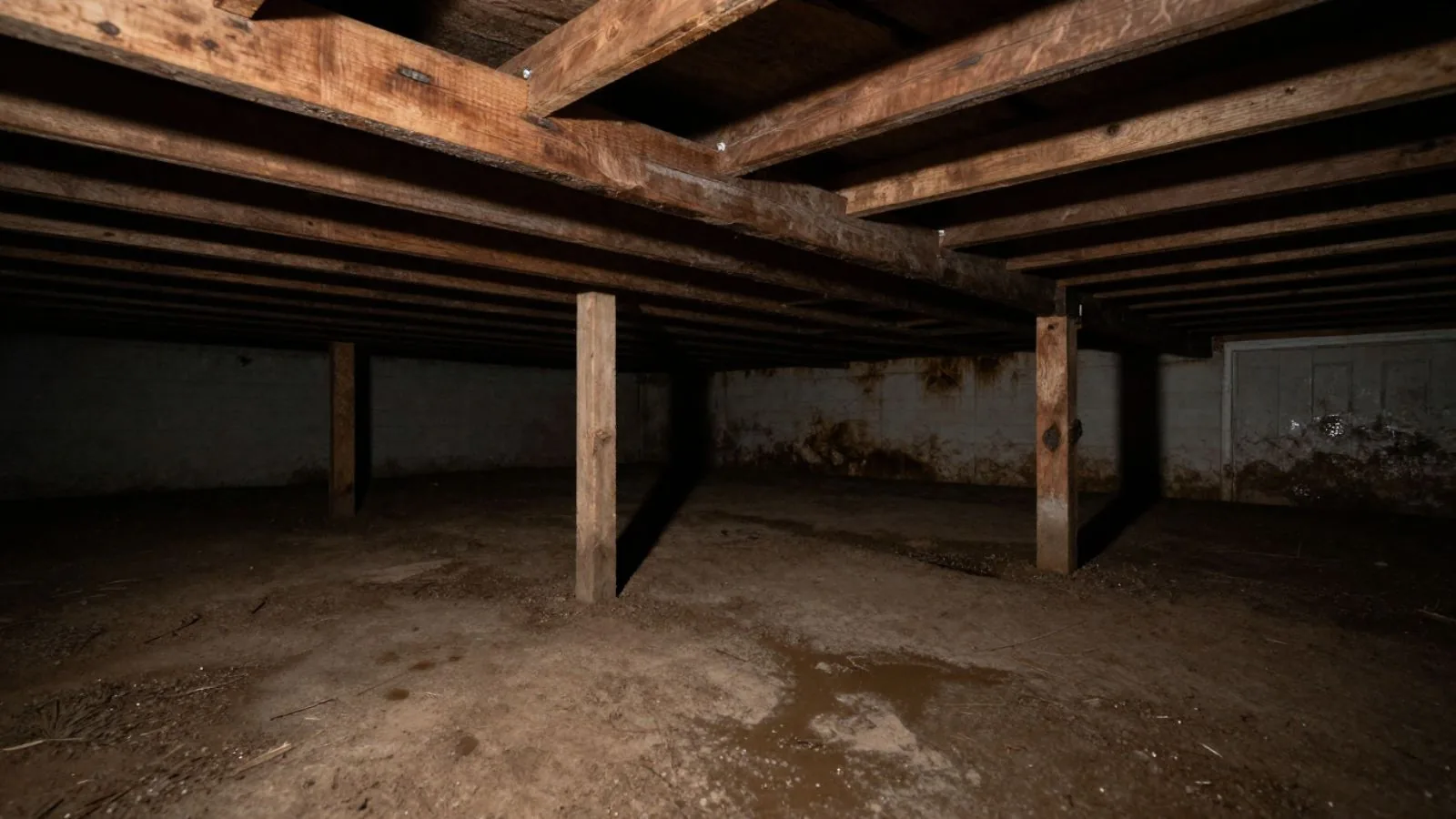
A musty smell after water damage almost always means a material somewhere is still damp or was never fully dried. Odors do not come from nowhere. They come from wet drywall, carpet pad, insulation, wood framing or soil, and air masking products only hide them for a few days.
The practical question for a Seaford, NY homeowner is where the damp material is. This guide covers the usual hiding places, a way to trace the smell yourself, what tools find what your nose cannot, and when testing is worth doing.
If testing or removal becomes necessary, ANSI/IICRC S520 is the published standard for mold remediation, and New York's Department of Labor licenses mold assessors and remediators for projects over 10 square feet.
Why the smell outlasts the leak
A leak that is fixed does not end the problem if the water had time to soak in. Drywall can wick moisture several inches above a visible stain. Carpet pad holds water like a sponge, and insulation inside a wall cavity can stay wet for weeks without any surface sign.
Without air movement and dehumidification, those materials dry slowly or not at all. Household fans and open windows help the surface but rarely reach inside a wall. If the area stayed damp for more than 48 to 72 hours, assume some of it is still wet.
Safety checklist before you trace a smell
- Do not disturb visible mold growth by brushing or sanding it, since that spreads it through the room.
- Avoid spraying scented products over the smell. They mask the clue you need to trace it.
- Shut off the water to a suspected leak and photograph the area before anyone opens a wall.
- Ask a physician about any health concerns, because this site makes no health claims.
Smell still there weeks after the leak was fixed? Call the 24/7 line and ask about moisture mapping to find what is still wet.
Call (516) 845-9582The usual hiding places
Behind baseboards and walls
Water runs down inside a wall cavity and collects at the bottom plate. Look for paint that bubbles near the floor or a baseboard that feels soft.
Under carpet and pad
Pad stays wet long after the carpet surface feels dry. A smell that gets stronger when you walk over one spot is a clue.
Under hardwood or laminate
Water travels under flooring, and the subfloor can stay damp. Cupping or gaps at the seams point to moisture below.
Above the ceiling
Insulation and framing hold water from a roof or upstairs leak. A smell from the ceiling area on humid days is a common sign.
Crawl spaces and basements
Soil moisture, a failed sump or poor venting keeps these areas damp. Odor can rise through floor registers and gaps.
HVAC and appliances
A clogged condensate drain, a wet air handler pan or a leaking dishwasher line can keep a cabinet or closet damp.
How to trace the odor yourself
Nose tracing is a start. It cannot tell you what is behind a finished wall.
- Close windows and the HVAC system off for an hour so the smell can settle, then walk through each room and note where it is strongest.
- Check low points first: corners, closets, the base of exterior walls and under sinks.
- Press on drywall, baseboard and flooring with a flat hand. Soft, cool or spongy is a warning.
- Look for stains, peeling paint, rust on fasteners or white mineral deposits on masonry.
- Use a plain hygrometer from a hardware store to read relative humidity. Indoor levels held above 60 percent for long stretches create the conditions for growth.
- Take photos and write down where and when you smelled it, since pattern helps a pro.
What tools find that your nose cannot
A pin-type or pinless moisture meter reads the water content in drywall, wood and concrete. A thermal imaging camera shows temperature differences from evaporating water, so wet areas appear as cooler patches. Together they produce a moisture map, a drawing of which walls, floors and ceilings are above the dry reference.
A moisture map is usually the first step in structural drying and dehumidification, and it turns a guess into a short list of spots. A borescope camera on a flexible cable can look inside a wall through a small hole without tearing it open.
Match the clue to the next step
| What you notice | Likely cause | Next step |
|---|---|---|
| Smell strongest at baseboards | Damp bottom plate or wet insulation in wall cavity | Moisture meter and thermal scan of the wall |
| Smell when you walk on one spot | Wet carpet pad or subfloor | Lift a corner and check the pad |
| Smell in a closet or cabinet | Slow plumbing or appliance leak | Check lines and the drain pan |
| Smell on humid days only | High indoor humidity or damp crawl space | Hygrometer log and a dehumidifier |
| Smell from ceiling or vents | Roof or HVAC condensate leak | Inspect attic, air handler pan and drain line |
| Smell returned after cleaning | Moisture source not yet found | Moisture mapping before more work |
When testing makes sense
Testing is a tool, not a first step. Air or surface sampling can tell you whether mold spore counts run higher indoors than outdoors. It cannot say where the moisture is. If you see visible growth, finish the moisture search first and consider an independent assessor.
In New York, mold assessment is a licensed trade, and a mold project of more than 10 square feet requires an independent assessment and a post-remediation assessment. Ask for the license number. If you are weighing options, see the mold remediation page. Questions about how any smell affects your health belong with a physician.
What helps and what only hides it
If the source is plumbing, a plumber is the right call. If it is the roof, a roofer is. Restoration crews dry and clean, they do not repair those systems.
- Helps: removing wet carpet pad, opening a wall cavity to dry it, running LGR dehumidifiers and air movers until readings match a dry reference.
- Helps: fixing the source, such as a supply line, a drain line or a roof flashing.
- Helps: keeping indoor humidity steady with a dehumidifier in a basement.
- Only hides: sprays, candles, ozone claims and fogging without removal.
- Only hides: painting over a stain before the wall reads dry.
What to expect from professional drying
A crew places air movers to push dry air across wet surfaces and LGR dehumidifiers to pull moisture from the air. Readings are taken daily and compared with a dry reference. Wet carpet pad, soaked insulation and swollen drywall are often removed, because they dry slower than they cost to replace.
Drying times vary with material, temperature and how long the area stayed wet. For wall-specific work, see wall and drywall water damage repair. If the smell is in a below-grade room, the basement water damage cleanup page covers what happens there. Scope and price are explained before work starts.
What Seaford homeowners should check locally
NOAA's 1991 to 2020 normals for Islip MacArthur Airport, the nearest long-record station reached, show an annual precipitation normal of 45.99 inches. That is a lot of damp air and wet soil across the year, so keep a hygrometer in the basement and run a dehumidifier in the humid months if readings stay high.
The National Weather Service recorded canal overflows in Seaford during Hurricane Irene on August 28, 2011. A home that took water in a storm like that should have walls and flooring checked with a meter, even years later, if an odor shows up. For the towns a crew covers near Seaford, see the service area page.
Frequently asked questions
Why does my house smell musty after the leak was fixed?
Fixing the source does not dry what already got wet. Drywall, pad, insulation and framing can hold moisture for weeks. A moisture meter and thermal scan can find which materials still read high.
Will an air purifier or dehumidifier fix the smell?
A dehumidifier helps if the cause is high humidity. It will not dry a saturated wall cavity by itself. An air purifier filters air but does not remove the damp material producing the smell.
Can I just replace the carpet?
If the carpet pad is the source, replacing carpet without drying the subfloor can bring the smell back. Check the subfloor with a meter first. Carpet and pad are often separate decisions.
Does a musty smell mean there is mold?
Not always, but it points to damp materials, which are where mold can grow. A moisture survey tells you what is wet. If growth is visible, a licensed assessor in New York can evaluate it.
How long should I wait before calling someone?
If the smell lasts more than a few days after a leak, or if materials stayed wet beyond 48 to 72 hours, call. Early readings are cheaper than finding out after paint peels.
Is a musty smell in a Seaford basement after heavy rain normal?
It is common but not something to ignore. The nearest NOAA station records about 46 inches of precipitation in a normal year. If the odor appears after rain, check for seepage at the slab joint and the sump pump, and read humidity with a hygrometer.
If the odor keeps coming back, call the dispatch line. A moisture survey can show where it starts before anything is torn out.
Call (516) 845-9582