
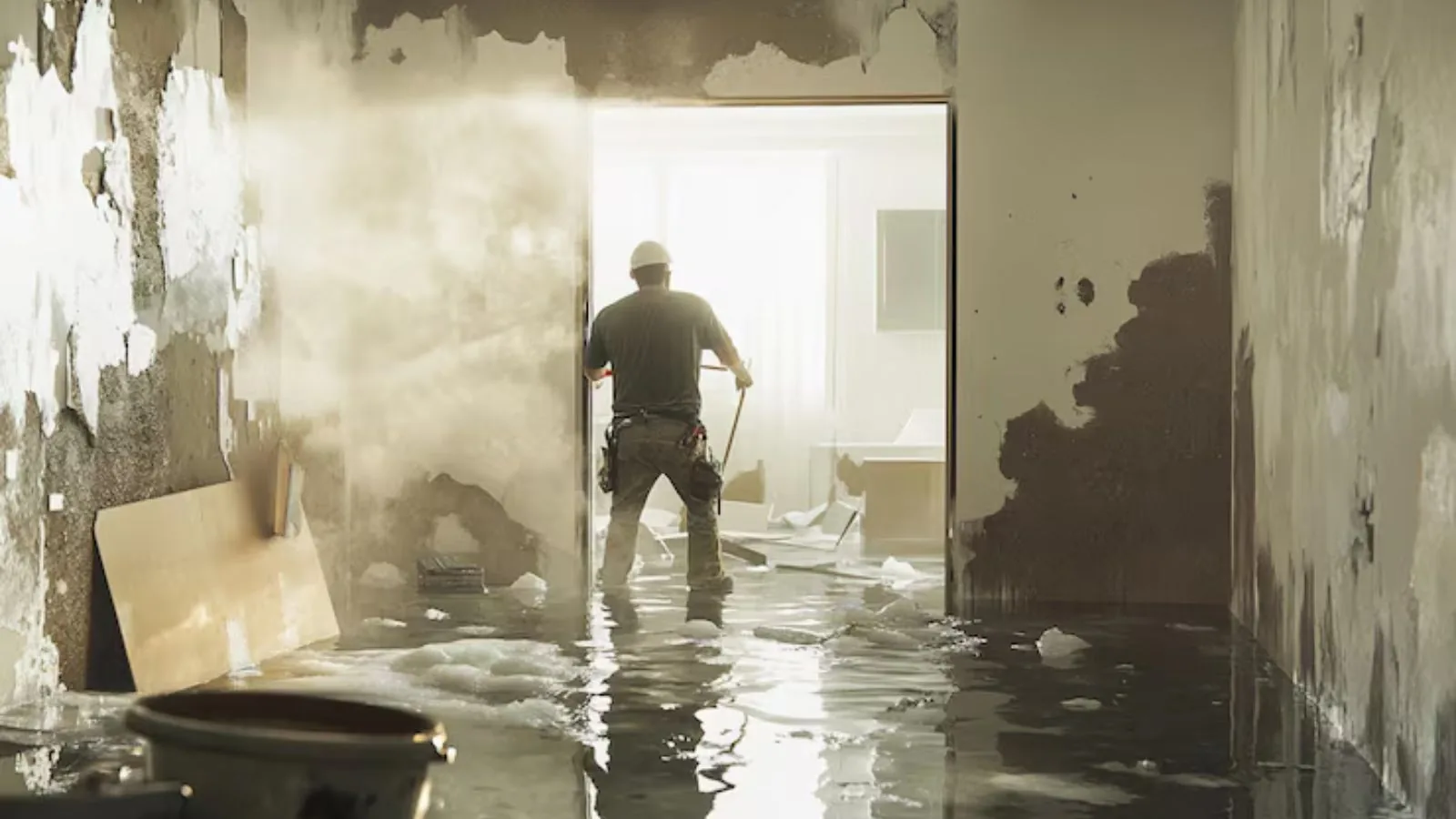
Sometimes, and the cause of the water matters more than the amount. A homeowners policy in Seaford, NY usually responds to water damage that is sudden and accidental, like a supply line that bursts overnight. It usually does not respond to flood, to leaks that went on for months, or to damage that traces back to poor upkeep.
Your own policy has the final word. Wording differs by insurer, by endorsement and by the deductible you picked. Use this guide as a list of questions for your agent, not as a coverage opinion.
Sudden and accidental versus gradual
Most policies draw one line first. Water that arrives fast and by surprise is the kind of loss the policy was built for. Water that seeps for weeks is usually treated as a maintenance problem.
A pipe that splits inside a wall on a January night is the textbook sudden case. A pinhole weep behind a vanity that stains the cabinet floor over a season is the textbook gradual case. Many real claims fall between the two, and the adjuster's main question becomes how long the water had been there.
Evidence of timing settles most of these disputes. Dated photos, a plumber's note on the failed part and a moisture reading taken on day one all help show when the loss began. Ask your insurer how your policy defines the word sudden.
| Event | Often treated as | What to check in your policy |
|---|---|---|
| Supply line or fitting bursts | Sudden and accidental | Whether the repair of the pipe itself is excluded |
| Water heater tank fails | Sudden and accidental | Age or maintenance conditions |
| Slow drip under a sink for months | Gradual, often excluded | Any continuous seepage exclusion |
| Washer hose bursts | Sudden and accidental | Appliance and hose wording |
| Rising water from a storm or canal | Flood, usually excluded | Separate flood policy status |
| Sewer or drain backs up into the basement | Excluded unless endorsed | Water back-up endorsement and its limit |
What a standard policy usually pays for, and what it usually skips
Think in two layers. The first layer is the damage the water did to your home and belongings. The second is the cost of getting the pipe, tank or appliance that failed fixed.
- Often covered when the cause is sudden: drywall, flooring, insulation and cabinets damaged by the water, plus drying work
- Often covered with limits: personal property such as furniture and clothing, depending on how the policy values it
- Often not covered: the failed pipe, tank or hose itself, and the plumbing repair to replace it
- Often not covered: wear, rust, corrosion and slow leaks that were left alone
- Usually not covered: flood, and sewer or drain backup without a specific endorsement
Treat that list as a pattern, not a promise. Exclusions and sub-limits sit in the fine print, and two neighbors can hold policies that answer the same loss differently.
Water still spreading while you read? Call the dispatch line and a dispatcher will take your details at any hour.
Call (516) 845-9582Flood is a separate category
The New York State Department of Financial Services (DFS) says the typical homeowners or renter's policy does not cover flood damage. Flood in insurance terms means water rising from outside the building, such as tidal surge, overflowing canals or surface runoff pooling against the foundation.
Flood cover comes from a separate policy, often through the National Flood Insurance Program. If rising water entered your home, read about flood damage restoration and call your insurer before you assume anything about the claim.
The water back-up endorsement
DFS also points out that some coverage for sewer and drain backup comes through a water back-up or sewage endorsement added to a homeowners policy. Without it, a basement floor drain that pushes up wastewater is commonly excluded.
Endorsements often carry their own limit, which can be lower than the main dwelling limit. Look for it on the declarations page, and if the page does not mention it, ask your agent in writing. A backup involves contaminated water, so see the notes on sewage backup cleanup before touching anything.
Questions to put to your insurer before you need them
An hour with your policy now is cheaper than a surprise later. Pull the declarations page and these seven answers.
- What is my deductible for water losses, and is it different for named storms or wind-driven rain?
- How does the policy define sudden and accidental versus continuous or repeated seepage?
- Do I have a water back-up or sewage endorsement, and what is its limit?
- Do I have a separate flood policy, and who issues it?
- Is the cost of finding the leak covered, such as opening a wall to reach the pipe?
- How are belongings paid, at replacement cost or at depreciated value?
- What mitigation steps does the policy expect me to take, and what proof should I keep?
Deductibles and the decision to file
Small losses can land under the deductible, which means filing would pay nothing and still create a claim record. Big losses are different. A dishwasher line that soaked a kitchen and the floor below it can run well past a typical deductible.
Ask your agent how claims history is treated before you decide, and get the drying scope priced so you can compare it to your deductible. A burst pipe that has opened walls usually needs a formal look. A mop-up of a small appliance spill may not.
What to do in the first day whatever the coverage answer is
Policies commonly expect you to protect the property from further damage, and mold and rot grow quickly in wet building materials. Stop the source if it is safe, then document before cleanup. DFS advises homeowners to photograph damage before cleaning up and to hold off on permanent repairs until the insurer has inspected.
Dry-out is not a permanent repair, so starting water extraction and drying to limit the damage is usually consistent with that advice. Keep every receipt and ask your insurer how it wants emergency work documented.
Where a restoration company fits, and where it does not
Honest limits
A restoration company does not decide coverage and cannot promise that a claim will be approved. That decision belongs to your insurer.
What a crew can do is measure the wet area, record moisture readings, describe the scope in writing and dry the structure to the ANSI/IICRC S500 standard. Ask any company whether its crews follow that standard.
A short checklist for a policy review
- Find the declarations page and note the water, flood and back-up lines
- Confirm whether a flood policy exists for the home
- Write down the insurer's claim contact in your phone
- Photograph the water heater, washer hoses and main shutoff while they are dry
- Keep a folder for receipts, plumber notes and dated photos
Our appliance leak water damage page covers the sources that most often turn a dull Tuesday into a claim.
What Seaford homeowners should check locally
Nassau County's hazard mitigation plan lists Seaford with mapped V-zones, which are the coastal high-hazard flood areas. Look up your own address on the FEMA flood map and ask your agent whether a flood policy makes sense, because a standard homeowners policy will not fill that gap.
The National Weather Service impact sheet for the Freeport tide gauge records canal overflows in Seaford during Hurricane Irene on August 28, 2011. That was surface and canal water, which is flood and not a plumbing failure. If water reaches your basement that way, the claim path runs through flood cover, so keep dated photos of the waterline.
For a larger service view, see the Seaford service area page.
Frequently asked questions
Does homeowners insurance cover a burst pipe?
Often yes for the water damage, when the pipe failed suddenly. The pipe repair itself is frequently excluded, and so is damage from a leak that was dripping unnoticed for a long time. Check your policy and ask your insurer, especially about the deductible and any freeze-related conditions.
Is flood damage ever covered by a standard homeowners policy?
Usually not. DFS states that the typical homeowners or renter's policy does not cover flood damage. Flood cover normally comes from a separate policy, such as one through the National Flood Insurance Program, so check whether you hold one before a storm.
What is a water back-up endorsement?
It is an add-on that can extend a homeowners policy to damage from sewer or drain backup and sometimes sump pump overflow. It often has its own limit. If you do not see it on the declarations page, ask your agent whether it is available for your home.
Will insurance pay to dry out my home before the adjuster arrives?
Many policies expect you to take reasonable steps to prevent further loss and often pay for them, but terms vary. Photograph everything first, keep receipts, avoid permanent repairs and call your insurer to ask how emergency drying should be documented.
Do slow leaks count as water damage claims?
They are often excluded as gradual or continuous seepage. Some policies cover a hidden leak if it was truly unknown, so dated evidence matters. If your wall is staining over weeks, read about wall and drywall water damage repair and talk to your insurer early.
My Seaford basement took on water during a heavy rain. Is that covered?
It depends on how the water got in. Rain pooling outside and seeping through the foundation is commonly treated as flood or surface water and excluded, while a failed sump pump or backup may need a specific endorsement. Check the policy, ask your insurer and review basement water damage cleanup for what to do while you wait.
Questions about scope or drying work after a loss? Call the 24/7 line and the work gets explained before anything starts.
Call (516) 845-9582